Find one of the largest information about Sport Cars to increase your Sport Cars here

Tuesday, January 4, 2011

Top Sports Cars of All Time

When it comes to cars, especially sports cars, you have your favorites and I have mine. The question of what constitutes the best is a hot button issue, especially among truly knowledgeable enthusiasts, because we all have a different set of criteria to work from.

The Sports Car
The best sports cars are defined by their driving and mechanical performance. As a group, they are "open, low built, fast motor cars". They are dedicated high performance machines and they take many forms, depending on the manufacturer and market. But the sports car is more than just a fast car. It hugs the road, shifts responsively, accelerates quickly and can break on a penny all the while being street legal. It is no wonder then, that we love them and we love to talk about them almost as much as we love to drive them. So while this list may not match yours, it does reference some of the best sports cars of all time.

10. Mercedes Benz 300SL Gull Wing

The first production car to use fuel injection and a testament to German engineering in 1954. 215 bph. Top speed 135 mph.

9. Jaguar E-Type
 
Produced in 1961-1964. 265 bph. Top speed 240 km/h. 0-60 in 7 seconds.

8. Chevrolet Stingray Corvette
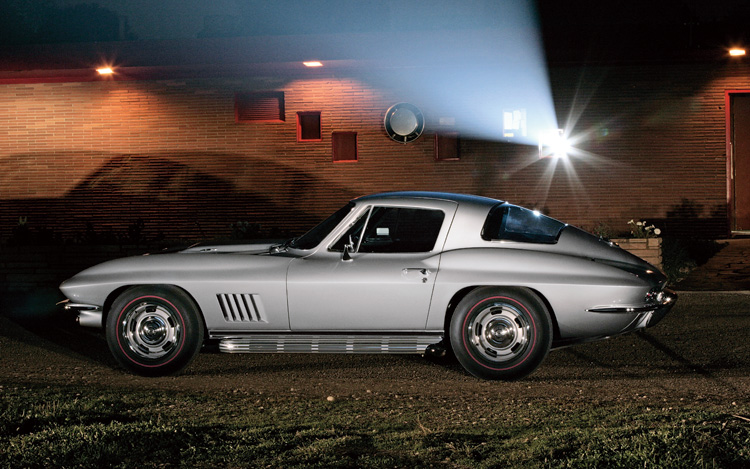
 
The first American sports car and maybe the only American sports car. Produced in 1966. 425 bph. Top speed 245 km/h. 0-60 in 4.8 seconds.

7. Nissan Skyline


Banned from the streets of North America and some racing competitions in order to even the playing field. 480 bph. 0-60 in 3.3 seconds.

6. Ferrari Enzo
 
Introduced in 2002. 660 bph. Top speed 350 km/h. 0-60 3.3 seconds.

5. Lamborghini Miura
 
The car that popularised the mid engine design. Produced from 1967-1969. 350 bhp. Top speed 277 km/h.

4. Bugatti Veyron

A road worthy luxury grand tourer. Introduced in 2005. 1001 bhp. Top speed 407 km/h.

3. Ferrari 250 GTO

The best Ferrari of all time and the most beautiful car of all time. Produced from 1962-1963. 302 bhp. Top speed 280 km/h. 0-60 in 5.8 seconds.

2. McLaren FI

Possibly the greatest road going car of all time and the fastest naturally aspirated road car to this day. Produced from 1993-1998. A unique three-seat design with 627 bhp. Top speed 386 km/h. 0-60 in 3.2 seconds.

1. Porche 911

The 2010 Porche 911 is a 2 door, 2 seat sport coupe with rear engine and 435 bhp. Top speed 194 mph. 0-60 in 4 seconds.


This article was written by Tom Sangers on behalf of Romans International who are Aston Martin Dealers and Bentley Dealers based in the UK.

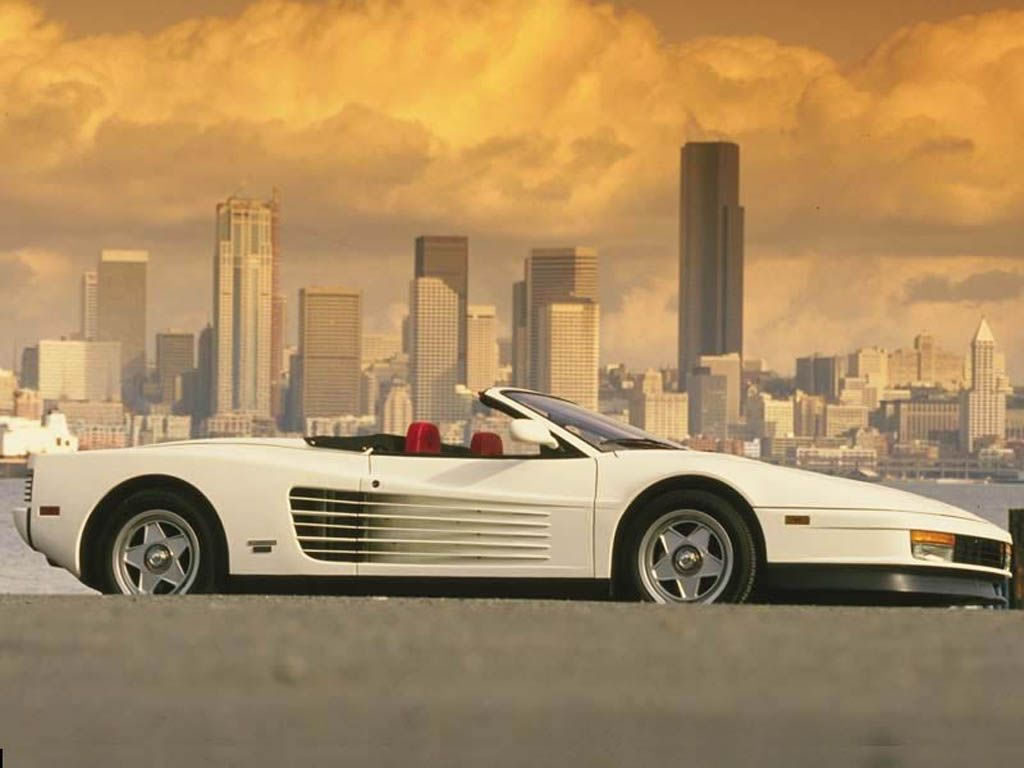
Ferrari Testarossa Models

Testarossa retained the spotlight even after production of its final variant ceased in 1996
Ferrari has a formidable presence in the international motoring scene and there isn't a car enthusiast in the world who can't automatically paint a mental picture of the Ferrari Testarossa when called to task.
The cherry-red finish with the silver rims and cream-colored interior is the combination that made Ferrari famous and that made the Testarossa the most admired car of the 1980s, leagues above Chevrolet's Stingray Corvette.
Ferrari started production of the Testarossa in 1984, with the first model to hit the streets being the 1985. For the 11 years it was in production, there were a few minor tweaks to improve the overall appeal and functionality of the sports car, but the basic model stayed the same, and the original was always considered to be the best of the bunch.
Testarossa wasn't just an average production model for Ferrari. This was to be the car to succeed the Berlinetta Boxer and hopefully put Ferrari back on the map. Everything about Ferrari's newest sports car just stood out as dominant and "cool." The name itself was derived from the red cam covers - testarossa literally means "red head" in Italian.
Undoubtedly, the Ferrari Testarossa instantly took center stage and became the world's fastest production car (non-racing, of course). This is the model that practically invented the term "supercar" when associated with road-ready production models.
The designing process for the Testarossa began in 1982, with the idea to create a street car that both looked and performed like a racing car. The design team came up with a sleek, mid-engine design, featuring radiators in the flanks, a low top, state-of-the-art brakes, a stellar transmission and a 12-cylinder powerhouse engine.
A lot of testing also went into the overall design of the car's body. Ferrari pulled no punches when it came to measuring the Testarossa's performance at high speeds. They designed the car by using a high-speed wind tunnel to measure drag and eventually formulated what they considered to be a flawless aerodynamic design.
Carbon-fiber construction wasn't really big in the automotive industry in the 1980s, so Ferrari used what they had available, while still making sure to use only the best materials. The 1985 Testarossa was built from galvanized steel for the roof and doors, strong, lightweight aluminum for the body, and glass fiber pieces throughout other areas of the car.

Ferrari also designed the suspension for the high-speed driving and taking corners at increased speeds. The rigid suspension allowed the car to remain stable. At slower speeds, the Testarossa's handling and overall feel could be described as rough, but it all smoothed out at higher speeds. The hydraulic-assisted vented brakes were also state-of-the-art at the time.
One of the most loved aspects of the 1985 Ferrari Testarossa was the interior. The firewall, luggage shelf and wall-bound cabin gave the interior the overall feel of an airplane cockpit. The manual transmission, steering wheel and dashboard were also all lowered and on an angle, allowing the driver a full range of motion while staying in the flow of the car's design.
The Testarossa cost a whopping $87,000 in 1985, and it was pushing 390 horsepower, could get up to 60 MPH in 5.3 seconds, and had an overall speed of 180 MPH./Article by: James Man

Monday, January 3, 2011

Cadillac to axe turbocharged SRX (U.S)

Cadillac is looking to ditch its SRX 2.8T due to flaccid sales.

While the 2.8T makes a very good case for its self, producing 300bhp and 302Nm (295lb-ft) of torque, it didn’t attract many customers. A mere 10% of consumers plucked for the 2.8T, while the remainder chose the 3.0 litre 265bhp petrol engine.

One possibility may be the 2.8T’s starting price of $49,915. Cadillac is looking to pull the engine as the 2012 model year comes into season.

Kia Picanto/Morning spied undisgused on a commercial shoot

2011 Kia Morning shown here
Our spies have caught up with the forthcoming Kia Picanto (Morning in South Korea) completely free of camouflage whilst on a commercial in south-western United States. The car will be longer and wider than the outgoing model, while retaining the same height.

Like previous spy photos and sketches reveal, the new Picanto will look like a miniature Venga; muscular shoulders with rising window line, lower roofline, larger wheel arches, large headlights with oversized foglamps housings and a protruding bumper will all contribute to a sporty, lean look. Kia's trademark "tiger nose" will mimic that of the Soul.

At the rear, LED-esque tail-lights that imitate the number seven jut while the Kia badge, which doubles up as a door handle to give access to the boot, dominates the bootlid. Reversing lights and reflectors are now positioned on the edges of the rear bumper.

On the inside, the Picanto is likely to bare resemblance to the Venga and Soul and will sport substantially better interior materials and more space as engineers use every centimetre of space available.

While the 5dr (pictured here) is the only body-style currently available, KIA is reported into looking at a 3dr variant to help lower the base price. Expect the Picanto to be even more practical than the outgoing model.

Hyundai-KIA’s all-new 1.0 litre petrol engine will live under the bonnet, alongside a 3-cylinder 1.1 CRDi and a naturally-aspirated 1.2 litre petrol. The 1.0 litre petrol will emit 99g/km and return upto 65mpg. A turbo-charged 1.2 litre petrol engine, developing anything upto 150bhp may be in the pipeline and is likely to replace the regular 1.2 litre.

Like the current line-up, value for money is key here. So we expect electric front windows, air-conditioning, x4 airbags, MP3 compatible radio/CD player, and electrically adjustable door mirrors to be standard. South Korean models are likely to feature luxuries like electric sunroof, auto-dimming rear-view mirror w/reversing camera, heated front seats, chrome exterior door handles, climate control, electric folding door mirrors, and rear electric windows. The all-new Picanto will premier at the Geneva motor show in March, before going on sale in Spring.

We anticipate a modest price increase compared to the outgoing model; an entry-level price of £7k is suggested, before topping out around £9,000. Automatics will add anything upto £800 on top of manual models. European prices may start at €8,000.

Sunday, January 2, 2011

Kia to start production of unnamed model in 2012 (SK)

Kia apparently wants to start production of a new car at its Slovakian plant in 2012.

“We launched two new models this year and we want to launch a new model in 2012”, In-Kyu Bae, head of Kia Motors Slovakia said, following a meeting with Slovakian Prime Minister, Iveta Radicova.

In northern Slovakia, by Zilina, Kia’s assembly plant has a yearly production space of 300,000 units, in which it produces three models there; the Sportage, Cee’d and the Hyundai ix35. Kia will be expanding capacity this year as the SUV’s receive the highest demand.

Photo Gallery: 2011 Jeep Compass facelift

Jeep has released prices of its restyled Compass compact SUV, which receives more standard equipment and a substantially higher price.

The entry-level Compass Base starts from $19,295, nearly $3,930 more than the 2010 Compass, excluding a $700 destination fee. Standard features include electrically adjustable/heated door mirrors, remote central locking, x4 electric windows, air-conditioning, roof rails, front fog lamps, cruise control, 60/40 split folding rear seats, 17” aluminium wheels, LED boot torch, and tinted glass.

New mid-spec Latitude features heated front seats, 115v auxiliary socket, leather steering wheel, and a fold-flat front passenger seat. This comes with a price-tag of $21,595, saving $255 over the 2010 Compass.

Flagship Limited trim-level has 18” aluminium wheels, 6CD autochanger, climate control, leather interior w/driver’s electrically adjustable seat, and auto-dimming rear-view mirror. The Limited will cost you $910 over the 2010 model, at $24,295.

All Compass’ are fitted with an upgraded 2.4 litre World Engine that develops 172bhp. A 2.0 litre 158bhp petrol engine is available on the base and Latitude. Excluding the entry-level model, the Compass is fitted with a CVT. A 5 speed manual is fitted elsewhere.

A host of optional extra are available, some cheaper than the 2010 Compass. These include a CVT transmission for the Base at $1,100. A satellite navigation system is offered at $685 and four-wheel drive will set you back $1,700.

• Continuously variable automatic transmission (base only): $1,100

• Four-wheel drive: $1,700

• Security Group Package: Curtain airbags, USB port, remote start, Bluetooth, alarm, auto-dimming rearview mirror: $1,195

• Sun and Sound Package: nine-speaker stereo, powered sunroof: $1,295

• Media Center Package: 30GB hard drive, touch-screen display: $640 (base, Latitude), $290 (Limited)

• Navigation System: $685

• Trail Rated Package: 140 amp alternator, four-wheel drive off-road mode, brake lock differential, engine oil cooler, fuel tank skid plate shield, full-size spare tyre, hill descent control, hill start assist, tow hooks, trailer tow wiring harness: $500 (four-wheel drive needed)


Saturday, January 1, 2011

Kia Pro_cee'd facelift leaked

Official photos of the restyled Kia Pro_cee’d have leaked onto the web, prior to its worldwide premier at the forthcoming Geneva motor show.

While full details are scares, obvious revisions will include remodelled headlamps, front bumper, and grille. Engines will be altered too, to give lower emissions, better performance and fuel economy.

The 1.6 CRDi will now produce 128bhp (130PS), up from 89bhp (90PS), and torque has been increased from 235Nm (173lb-ft) to 255Nm (188lb-ft). Expect CO2 emissions of under 119g/km and combined fuel economy of 60mpg.

Nissan X-Trail 2WD pricing announced (AU)

Nissan has released prices of the 2011 X-Trail 2WD in effort to sway customers to the compact SUV market and away from mid-sized sedans and SUV’s.

The base ST 2WD with a manual transmission has a price tag of $27,990, making it the cheapest X-Trail to hit the Australian market. This comes equipped with 17” alloy wheels, x6 airbags, Bluetooth, ESP, cruise control, MP3 input w/steering wheel audio controls & 6CD auto-changer and heated and cooled cup holders. A CVT can be mated to the 2WD and a higher-specification model, named ST-L. The ST-L adds leather interior w/electric driver’s seat, heated front seats, front fog lamps, climate control, and privacy glass.

All 2WD X-Trails are powered by a 2.0 litre petrol engine. The 4WD variants will continue to home the same engines but the ST 4WD will be liable for a $500 price increase. This now features leather steering wheel & handbrake, chrome exterior door handles, and 17” alloy wheels.

Nissan Australia CEO, Dan Thompson, said he anticipated the revised X-Trail to make a “significant impact” on the compact SUV segment, with the entry-level X-Trail 2WD to be popular among families and couples.

“We are sending a strong message to the market that we are serious about improving our market share and sales position still further in 2011,” Thompson said.

The X-Trail is outsold by the Subaru Forester.

ST:

Manual 2WD – $28,490

CVT 2WD – $30,990

Manual 4WD – $32,490

CVT 4WD – $34,990

X-Trail ST-L:

CVT 2WD – $34,990

CVT 4WD – $38,490

X-Trail TS:

Manual 4WD – $35,990

Automatic 4WD – $38,240

X-Trail Ti:

CVT 4WD – $44,490

X-Trail TL:

Manual 4WD – $42,490

Automatic 4WD – $45,240