Find one of the largest information about Sport Cars to increase your Sport Cars here

Wednesday, January 9, 2008

New Car: 2008 Peugeot 807 facelift


New 807: Versatile and luxurious:

With an updated design, cutting edge equipment and a new engine option, these latest developments on the 807 will confirm its position as a versatile luxury vehicle.

Since its launch in April 2002, the 807 has sold over 150,000 vehicles, largely due its many design strengths which set it apart from its competitors in the large MPV sector, such as:
twin electric sliding rear side doors, granting even greater access, and which seem to have a magical attraction to young children;

an interior modularity that enables all sorts of configurations and can accommodate seven individual seats (or 8 seats when fitted with a rear bench seat), plenty of storage for luggage, an expertly styled and user-friendly fascia panel, significant load carrying capability, and a carefully-designed passenger compartment, perfect for an active lifestyle
Dynamic and engaging driving experience with excellent road holding and guaranteed on board comfort.

High-level safety features, through its strong and protective structure, its restraint devices (It was awarded five stars in the EuroNCAP adult vehicle occupant test) and through the extra safety of the Peugeot Emergency Service linked to the RT4 Multi-media system;

A wide range of modern engines, with the very latest engine technology;

An elegant, feline and dynamic style, immediately identifiable as a model of the Peugeot marque, a design which, for European 807 buyers remains one of the two main reasons behind their decision to purchase.

It provides all the necessary features to attract this type of vehicle’s natural customers through its design and also through the on board experience it provides. The 807 now, however, sees the introduction of new external styling, new high quality interior features, improved equipment levels and a new high performance HDi power train (2.2-litre HDi DPFS 125kW 170 bhp) combined with a manual six-speed gearbox or, shortly after launch with a new automatic six-speed gearbox.

With all these new additions, the 807 will strengthen its position as a versatile, luxurious and dynamic MPV, capable of meeting the needs of ever more demanding customers, whatever their lifestyles.

STYLE:

Exterior styling:

Still based on the same timeless exterior design, the designers, however, have now added an extra touch of modernism and refinement to this latest 807. A number of subtle styling touches have been introduced to the front of the vehicle, with slight changes made to the air intake grille which is now separated by horizontal chrome detailing, a larger lion badge and the addition of a chrome trim round the entire vehicle. This feature helps to emphasise the body protection mouldings, which are also painted in the same colour as the vehicle’s exterior. To reflect the new chrome features, the side door handles now also have a chrome finish.

At the rear, the Peugeot badge is now larger, with a larger chrome tailgate trim accommodating the new “PEUGEOT” lettering. Finally, there are also two new metallic paint finishes available, “Rhodes blue” and “Moondust” grey.

Interior style:

Internally, the trims, finishes and fittings have been updated to match customer expectations – benefiting from the use of higher quality materials.

With this in mind, the plastic materials making up the fascia panel and door fittings, etc are now specified in ‘Mistral’ Black. Similarly, a lot of pre-prepared parts are in softer colours. The door handles, the gear knob and the fascia panel vent edges have a chrome finish, which contributes to the luxurious opulence of the passenger compartment.

Regarding the trim on the seats, the fascia panel and the door panels, the entry-level model (available depending on the market) will be trimmed in a new ‘Bise’ Grey woven fabric. This trim colour is also used on level two models, but here it is combined with a velour woven fabric. Customers can also specify the option of a second, lighter trim called ‘Matinal’.

This new look can also be found in level three vehicles, but this time the seats are trimmed in Alcantara® and fabric. As an option ‘Mistral’ black leather is available for the seats, with the door panels and fascia panel trimmed in Alcantara®.

THE NEW 2.2- LITRE HDi DPFS ENGINE – DW12BTED4 and a six-speed manual or automatic gearbox:

A new 2.2-litre HDi DPFS 125 kW (170 bhp) diesel engine has been introduced to become the top-of-the-range HDi diesel model in the 807 range. It will further enhance the dynamic and luxurious appeal of this vehicle.

This engine, fitted with twin turbo-chargers, can be already found powering the Peugeot 407 and the 607, and due to its engine technology is one of the most advanced engines available. This HDi engine provides a level of performance and driveability which is more frequently found with larger capacity engines, while still providing low fuel consumption and reduced CO2 emissions.

The 807 HDi range now comprises of:

2.0-litre 16v HDi DPFS 88kW (120bhp), 300Nm, 6-speed manual gearbox,
2.0-litre 16v HDi DPFS 100kW (136bhp), 320-340Nm, 6-speed manual gearbox,
2.2-litre 16v HDi DPFS 125kW (170bhp), 370 Nm, 6-speed manual gearbox,
2.2-litre 16v HDi DPFS 125kW (170bhp), 400Nm, 6-speed automatic gearbox (available in the Spring of 2008).

The petrol range is made up of two models:

2.0-litre 16v 103kW (141bhp), 200Nm, 5-speed manual gearbox,
2.0-litre 16v 103kW (141bhp), 200Nm, 4-speed automatic gearbox.

This new 2.2-litre HDi DPFS engine is the result of the fourth phase of the co-operation between PSA Peugeot Citroën and the Ford Motor Company and completes the evolution of the HDi range successfully developed in partnership since signing the co-operation agreement in 1998.

The four cylinder 2179 cm3 engine has a sixteen-valve cylinder head with twin overhead camshafts. It has a maximum power of 125kW at 4000rpm and a generous maximum torque of 370Nm at 1500rpm for the manual gearbox and 400Nm at 1750rpm with the 6-speed ‘Porsche Tiptronic System’ automatic gearbox.

The torque and driveability at low engine speeds are particularly impressive, with the engine producing a torque of 200Nm at 1000rpm and 280Nm at 1250rpm. The operating range is also very wide, with high torque output available at all engine speeds (more than 350Nm at 3000rpm). A new type of combustion chamber, a third generation common rail diesel injection system, increased injection pressure of 1800 bar and the fitment of parallel sequential twin turbochargers are the main technological innovations of this engine. Ultimately, this engine brings greater driveability to the 807 combining improved dynamic performance, with a six-speed gearbox, be it manual or automatic.

Technology:

Parallel sequential twin turbochargers:

The use of sequential twin parallel turbochargers is a world first on a four cylinder diesel car engine. The system (patented with Honeywell Turbo Technology) consists of two identical, small-diameter turbochargers.

At low engine speeds, a single turbocharger ensures engine responsiveness. This is then supported by a second turbocharger that starts up in parallel between 2600 and 3200rpm, depending on the power requirements and the atmospheric conditions. The system is controlled entirely by the engine management electronic control unit (ECU).

Furthermore, the low inertia of the two turbochargers, due to their compact size, significantly reduces the turbocharger response time. The use of this technology enhances driveability through the excellent torque availability across a wide engine speed range, this enables the driver to use lower engine speeds, thereby reducing fuel consumption and emissions.
ECCS combustion chamber (Extreme Conventional Combustion System)

The special design and large diameter of the combustion chamber enables the engine’s compression ratio (16.6:1) to be reduced, helping to reduce the quantity of incompletely burnt fuel by minimising the amount of fuel that is in direct contact with the cylinder bore walls. This effect is obtained as a result of a special piston design (manufactured from aluminium with a very high mechanical strength and thermal resistance) and geometry.

The geometry also makes it possible to significantly reduce SWIRL (air movement in the combustion chamber) and, therefore, limit thermal losses through the cylinder bore walls. These developments allow greater homogeneity of the air-fuel mixture, resulting in a significant improvement to the engine’s overall efficiency, as well as reducing combustion noise.

A third-generation common rail injection system with pressure increased to 1800 bar
The ECCS combustion system is combined with a new third-generation Bosch common rail injection system which has an increased injection pressure of 1800 bar (1350 for the first generation).

The higher injection pressure is controlled by new piezo-electric injectors in which each nozzle is equipped with seven apertures with a diameter of 135m. The use of these injectors allows the number of individual injections per cycle to be increased, potentially up to six times. This results in a more precise injection of fuel and, therefore, more complete and uniform combustion. Having greater control of the combustion and optimising the air/fuel mixture ensures emissions are reduced to a minimum at source.

The environment:

The new 2.2-litre HDi DPFS engine is a worthy standard bearer in terms of environmental protection, in a luxury MPV like the 807. First of all, the vehicle’s design and diesel engine benefit from excellent thermodynamics and the use of an HDi direct injection system increases this performance even further.

Due to the very high injection pressure of the common rail fuel injection system and the extremely precise spray of diesel fuel into the combustion chamber, the resulting combustion is more uniform and therefore both fuel consumption and emissions are reduced. Furthermore, the twin turbochargers and the exhaust gas recirculation system together play a key role in protecting the environment.

More specifically with the new 2.2-litre HDi DPFS engine’s new combustion chamber design and increased injection pressure of 1800 bar, the exhaust emissions have been reduced by around 30% compared to the 807’s original 2.2-litre HDi diesel engine.

All the above technology is combined with the latest-generation additive enhanced diesel particulate filter system (DPFS). This third generation, ‘octosquare’ type particulate filter has a service life of 180,000km on the 2.2 litre HDi. This increased service life is made possible by improvements to both the additive and to the design of the filter core.

The Eolys additive, the effectiveness of which enables a reduction in additive delivery, reduces the amount of residue left in the filter core. The filter support has a new structure, whose ‘octosquare’ shape and larger diameter inlet channels greatly increases the residue storage capacity.

Acoustics and vibrations:

The patented design of the double-wall cylinder block which is manufactured directly in the foundry, significantly improves the engine’s acoustic performance.

The fitment of two counter-rotating balancing shafts, the design of the engine mountings and the use of a dual mass flywheel also contribute to minimising engine generated vibrations.

A quick action butterfly valve in the intake system is actuated when the vehicle comes to a standstill to avoid any engine vibrations when the driver stops the engine.

Running Costs:

A large capacity two-section oil sump allows the oil change intervals to be increased to 30,000km. Similarly, the drive belt and the engine accessories are designed and dimensioned to be maintenance-free during the life of the vehicle.

6-speed ML6C manual gearbox:

The 807 2.2-litre HDi DPFS engine is paired with an ML6C-type six-speed manual gearbox whose gear lever is perfectly located in an elevated position.

6-speed AM6 automatic gearbox with ‘porsche tiptronic sequential control’
Responding to market requirements for greater user comfort, the unveiling of the AM6 six-speed automatic gearbox constitutes a real enhancement to the 807.

Topping the HDi DPFS range, this new engine and gearbox combination bring both improved dynamic performance and driveability to the 807. The use of a six speed gearbox provides both improved performance and acceleration due to a shorter first gear. It also improves acceleration thanks to the chosen gear ratios enabling the driver to optimise the available engine torque. The use of a ‘high’ sixth gear reduces fuel consumption and keeps noise levels low for improved motorway driving, without compromising vehicle acceleration, which instantly benefits when changing down one or more gears. Finally, this gearbox allows the engine to produce an even higher maximum torque figure of 400Nm at 1750rpm.

The gearbox has two driving modes: one automatic self-adaptive mode for a stress-free drive, which automatically adapts to the driver’s driving style and the other more active, thanks to the ’Porsche Tiptronic System’ sequential control.

Initially launched on the V6 petrol and HDi engines in the Peugeot 607, the AM6 automatic gearbox has been developed by the ‘Aisin AW’ Company, based on specifications set out by the PSA Peugeot Citroën Group.

The basic operating principle of the gearbox is the use of a combination of two epicyclic gear trains, one single and the other double, controlled by only five friction components (clutches or brakes). This principle reduces the gearbox size and weight compared to that of a four-speed automatic gearbox.

For improved safety, the gearbox has a ‘shift lock’ function that, while the engine is running, prevents the gear lever from being moved from the ‘Park (P)’ position without simultaneously pressing the foot brake. Similarly, a buzzer sounds when the driver opens their door after switching off the engine, if they have not put the gear lever in the Park (P) position.
Technical features:

The 2.2-litre HDi DPFS engine gives the 807 excellent responsiveness, flexibility at low engine speeds and great driveability. Its performance bears witness to this. With the driver only, it takes 31.4 seconds to cover 1000 metres from a standing start (32.1 with the automatic gearbox in Drive position). In gear acceleration between 80 and 120 kph takes just 9.6 seconds in 5th gear (7.7 seconds with the AM6 automatic gearbox). The maximum speed of 200 kph is reached in top gear (197 kph for the automatic gearbox).

The technology used for this engine and its effect on the engine torque output at low engine speeds, reduces fuel consumption and also reduces CO2 emissions (7.2-litres/100 km in the combined cycle, or 191g/km and 8.2-litres/100 km and 218g/km with the AM6 automatic gearbox). This low fuel consumption, combined with an 80-litre fuel tank, gives the 807 an excellent range.

Wheels and suspension:

The choice of wheels and suspension are perfectly suited to the dynamic performance characteristics of this new engine fitted to the 807.

The 807 uses McPherson-type front suspension and a torsion beam rear suspension, both guaranteeing excellent road holding and steering accuracy. The 807 2.2-litre HDi is also fitted with rear dampers and an anti-roll bar specific to this model, while at the front the rear lower wishbone bushes have been upgraded to improve their rigidity. These changes ensure the best possible compromise between road holding, comfort, active safety and driving pleasure.

With this engine, the 807 is exclusively fitted with 16» aluminium alloy wheels with 215/60 R 16 H tyres, combined with tyre under-inflation sensors.

Of a size to match the dynamic requirements of the vehicle, the braking system uses 310 x 32mm ventilated discs at the front, with double piston calipers. This provides the 807 with powerful, controllable and durable braking. Antilock brakes, wheel by wheel electronic brake force distribution (EBFD) and emergency brake assist (EBA) complete the system.

As with all 807s, the latest Bosch ESP (Electronic Stability Programme) system with specially developed software corrects any incipient ‘understeer’ or ‘oversteer’.

EQUIPMENT:

Stylish and natural, the developments in the new 807 also relate to the onboard equipment, with technology working for the driver and also for passengers, in relation to both safety and comfort. The new 807 can also be fitted with a hands-free Bluetooth™ kit, front parking assistance and a rear multimedia system, consisting of a 16/9 screen and a DVD reader.

A perfectly integrated rear multimedia system:

For the wellbeing of all rear passengers and the driver, a fold-away, adjustable 16/9 screen and DVD player are fitted in the central roof area of the vehicle. For the individual comfort of each occupant, two wireless headsets and a remote control are provided with the system. Using an audio/video jack, teenagers and young children with a keen interest in digital technology will be able to plug in games consoles, video players, computers, camcorders, cameras, etc. This system is optional but is even fitted as standard on higher spec models in some countries.

Bluetooth hands-free kit™:

Communicating with the car radio, this system allows the car to ‘recognise’ a Bluetooth™ mobile phone present in the car, take over its main functions, and transfer them to the car. The driver can then use their mobile telephone handsfree, and hear the telephone conversation through the car’s loudspeakers.

Front parking assistance:

Front parking assistance, normally provided as standard in higher spec models in some countries, is now combined with rear parking assistance.

This is a great help when parking and provides greater safety for pedestrians. It uses the loudspeaker closest to the obstacle, to communicate via a variable audible tone, which varies in frequency, the distance of a nearby obstacle. Furthermore, a visual representation of the remaining distance is also provided on the multifunction screen.

This system, made up of four ultrasound sensors at the front and another four at the rear, is activated when reverse gear is selected or at speeds of less than 10kph, after the car has stopped for over three seconds.

It is also worth noting that within the past few months, the 807 has also seen the introduction of the new RT4 Multi-media system. Linked to a colour 3D screen and grouping together audio, GSM, GPS and Peugeot Emergency services, it includes a 30GB hard disk enabling it to host maps covering the whole of Europe and to save up to 180 hours of music in MP3 format.

Related Links:

Teaser: 2008 Mercedes CLC

Two stars in the photo studio: Top model Eva Padberg and the new Mercedes-Benz CLC:

Leading model Eva Padberg and the new Mercedes sports coupé CLC share top billing in the key visual for the second Mercedes-Benz Fashion Week Berlin, which takes place from January 27 - 31, 2008. The new CLC will be unveiled to the public for the first time at the fashion event.

The purpose of the key visual is twofold:

It will be used as a motif on adverts, posters and event materials promoting the Berlin event, and at the same time will generate interest and a sense of anticipation in advance of the world premiere of the new CLC, because the photo reveals only part of the sport coupé. Most of the body is hidden by the vivid yellow fabric of the evening gown worn by Eva Padberg. The CLC will then be revealed in all its beauty on January 27, 2008 at the Mercedes-Benz Fashion Week Berlin 2008.

“The choice of Eva Padberg as our brand ambassador lends a fascinating face to our long-standing commitment to fashion,” says Dr. Olaf Göttgens, Vice President Brand Communications Mercedes-Benz Cars. “Like Berlin, she epitomises a young, modern lifestyle. That's why we are introducing our new sports coupé here, at Mercedes-Benz Fashion Week Berlin, and are presenting the CLC and Eva Padberg together in the key visual.”

Eva Padberg has been representing Mercedes-Benz as a brand ambassador at international fashion and lifestyle events since May 2007. Her encounter with the new CLC was captured on film by the renowned German fashion photographer Ellen von Unwerth, whose photos encapsulate perfectly the relationship between fashion and Mercedes design - both worlds in which innovation and perfection, coupled with elegance and style, are critical success factors.

Elegance, style and lifestyle:

In the automotive world, the name Mercedes-Benz epitomises these values. The commitment to fashion is therefore a logical development of the Stuttgart motor manufacturer's traditional image and claim.

Just like fashion, the car is now an expression of personal lifestyle. This is particularly true of the highly individual and exclusive species of the coupé.

New Mercedes sports coupé is the attractive “youngster” of the coupé family:

The new CLC, available from spring 2008, is an attractive and affordable entry into the Mercedes-Benz coupé family. The design, technology and equipment of the sports coupé meet the desire of young people for a car that is fun to drive and has a high lifestyle value, yet which also offers typical Mercedes standards of quality in respect of safety, comfort, environmental compatibility and functionality. 1,100 components have been either developed for the new sports coupé or refined from the previous model. The technical highlights of the CLC include new direct steering for even more nimble handling of bends, modern infotainment systems with colour display, Europe-wide DVD or hard-drive navigation with multimedia interface and a more powerful four-cylinder engine with 135kW / 184 bhp. Fuel consumption is up to 10.8 per cent better than in the predecessor model.

The key visual was shot in a studio near Barcelona, and features a black CLC with sports package picked out in a headlight beam. The coupé contains further exclusive technical innovations and extra fittings such as 18” light alloy rims, wide base tyres, headlights with black painted inner frames, sports suspension with lowered bodywork and chrome trim.

Top fashion designers present their collections:

Mercedes-Benz Fashion Week Berlin 2008 takes place from January 27 - 31, 2008 at Postbahnhof, the city's former mail train station. Leading international fashion designers will be presenting their latest collections, including the following brands: 30paarhaende, Heiress, Hugo, Intuitive, Joop!, Macqua, Michalsky, Marcel Ostertag, Sinemus, Stefan Eckert, Strenesse, Suzana Peric, Unrath & Strano, Sisi Wasabi and Zac Posen.

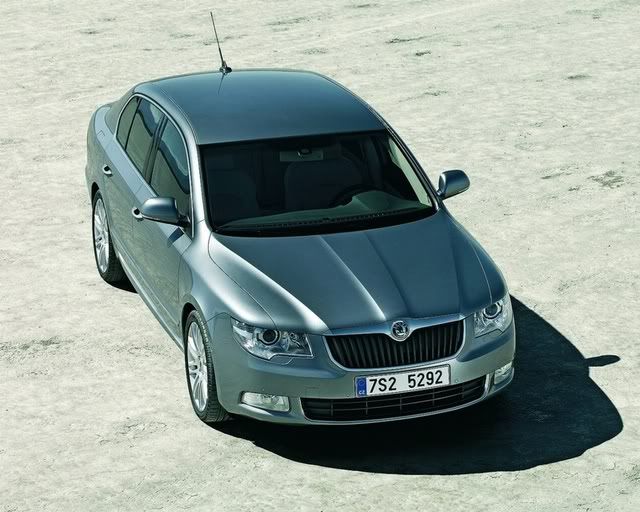
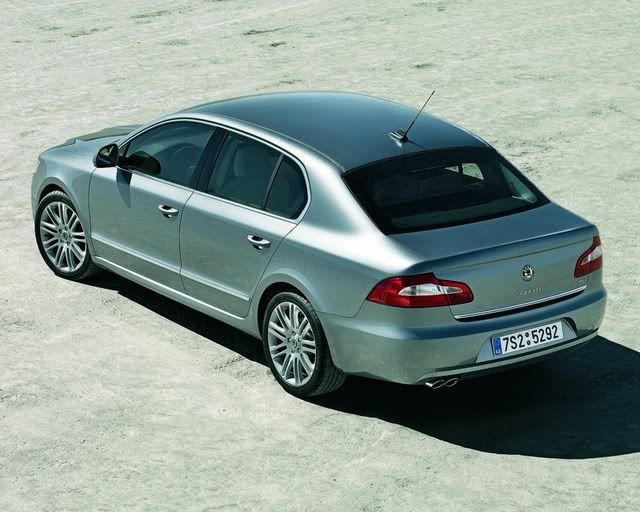
New Car: 2008 Škoda Superb


Škoda Auto is presenting the first official photographs of the new Superb. Offering really generous space, the new Škoda Superb is a leader in its class (medium/upper medium class cars).

With 4838 mm in length, 1783 mm in width, 1461 mm in height and a 2761mm-long wheel base, the new Škoda Superb offers a number of smart technological solutions, including adaptive “look-round-corner” headlamps, a new electronic air conditioning system, an automatic parking assistant system, and more. As safety was one of the top priorities in developing the new vehicle, the new Superb has altogether nine airbags.

The new Škoda Superb will be available with three petrol and three diesel engines (77 - 191 kW) and with both manual and automatic transmission systems.

The new Škoda Superb will receive a world premiere at the upcoming Geneva Motor Show and will be manufactured in Škoda Auto's plant in Kvasiny.

Related Link:

Saturday, January 5, 2008

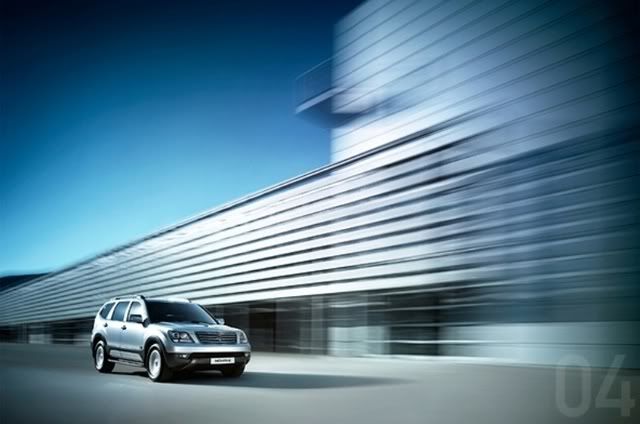
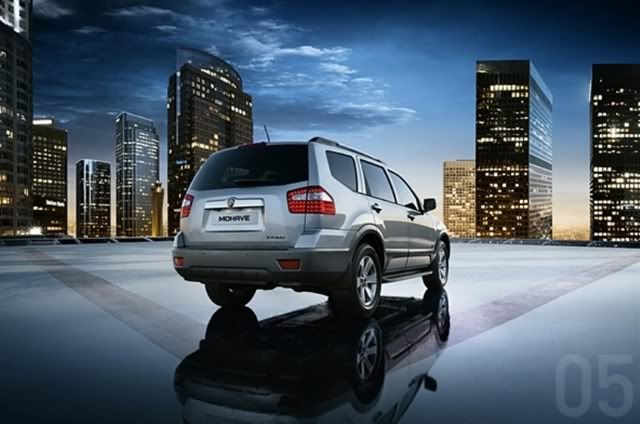
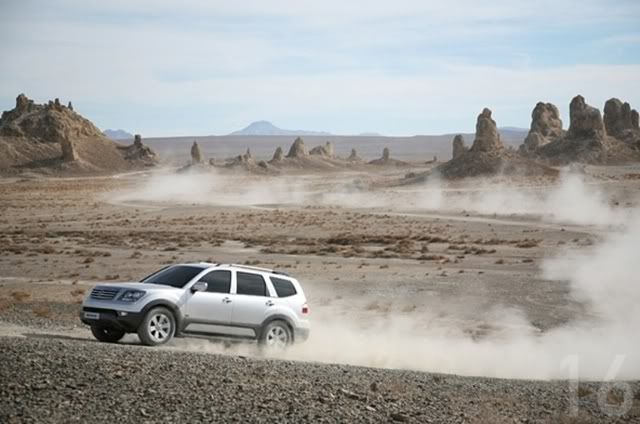
KIA Mohave goes on sale in South Korea


KIA's first body-on-frame SUV went on sale in its home market on 4th January. The Mohave will be wearing its very own badge in South Korea while oversea's markets will receive the KIA badging.

The Mohave is to shift 20,000 units a year in its home market and 60,000 units in other markets. In the U.S, the Borrego is set to take on the likes of the Jeep Grand Cherokee and Ford Explorer.

Under the hood, a series of V6's and V8's will be offered depending on the market. A 3.0-litre V6 diesel, the second-generation 3.8-litre V6 gasoline and newly-developed 4.6-litre V8 Hyundai Tau engine will be on offer, with the latter unit expected to be de-tuned to produce greater torque and power of 333 hp.

The Borrego will debut at the North American International Auto Show in Detroit on January 13th and is set to launch in the U.S market in late spring/early summer.

The Borrego could even find its way onto British shores providing there is a positive response. One engine will be available and its likely to be the 3.0 V6 diesel. Prices could start at £30,000.

Friday, January 4, 2008

New Car: 2008 Citroen C8 facelift


Building on the commercial success of its compact MPV range, recently bolstered by the C4 Picasso and Grand C4 Picasso, Citroën is continuing to develop models with spacious interiors by combining elegance and driving pleasure in its top-end C8 MPV.

Depending on the country, from the start of 2008 the C8 will be restyled inside and out, making its decidedly modern lines even more dynamic and enhancing the luxury of the cabin.

At the same time the C8 range will be extended, in some countries, with a new HDi diesel engine developing 173 bhp DIN (125 kW or 170 bhp EC), complete with a particulate filter (DPFS) and mated to a 6-speed manual gearbox. In the course of 2008, the engine will also be available in some countries with a 6-speed automatic gearbox.

The new engine completes a range comprising a 2-litre 143 bhp 16V petrol injection engine available with a 5-speed manual or 4-speed automatic gearbox, and two diesel engines, the HDi 120 and the HDI 138 DPFS, both with a 6-speed manual gearbox.

Already available on the C5 and C6, the HDi 173 DPFS is the flagship of Citroën’s range of 4-cylinder HDi engines. A number of innovative features (double parallel sequential turbo and new combustion and injection systems) provide outstanding driving pleasure by offering maximum torque of 273 lb/ft at a low 1,500 rpm. To complete the upgrade, Citroën has made changes to the running gear and brakes.

Finally, in addition to the new engine launch, new comfort equipment and driving aids have been added to the already richly equipped C8 range.

Singular silhouette and roomy interior:

Updated, prestige styling:

With its powerful and dynamic styling, the C8 stands out at first glance. The MPV features style changes that strengthen its top-range positioning and consolidate Citroën’s position in the large MPV segment.

The C8 front end features new, enlarged chevron motifs in the centre of tauter radiator grill lines, featuring small chrome bars stressing the vehicle's statue-like elegance. The grille rim, with its more pronounced lines, provides the perfect junction with the bonnet and the headlights, taking perceived quality to new heights.

The top-range appearance of the MPV is also reflected in new chrome door handles and painted body protectors with a chrome strip at front and rear. As though echoing the front end, the rear chevrons are more imposing than before, clearly denoting that the MPV forms an integral part of the Citroën range. Finally, the reversing lights are translucent.

A new interior that says "top of the range":

The restyling of the C8 cockpit is in keeping with the exterior style changes. They stress the MPV's top-of-the-range position and ensure a refined onboard atmosphere.

All the door wood trims, the steering wheel, the carpet, the mats and the upper dashboard arch are now black. The main contact parts (stowage compartments in front doors, glove box handle, air vent thumbwheels…) have been treated in soft paint for a more pleasant feel. Lastly, the top-range positioning of the C8 cabin is underlined by the use of a brilliant chrome finish on the door handles, gear lever and air vent cursors.

Roomy and versatile interior:

All the changes made inside the C8 stress the space and comfort on board. With a 2.82 m wheelbase, the C8 meets the requirements of top-range MPV clients who want a truly spacious interior.

The design of the seats is a perfect illustration of the model's versatility and stresses that all passengers are treated equally in terms of individualised comfort. The C8 can seat up to eight people on three rows of identical seats. Furthermore, the highly modular approach to seating means the luggage compartment can vary in size from 225 litres to 2,948 litres depending on the needs of the moment. This large volume, the width of at least 1,153 mm between the wheel arches, and the interior height are extremely practical.

Lastly, the cabin is particularly welcoming thanks to the electric sliding side doors which ensure easy boarding in all circumstances, even if the MPV is parked close to a wall or between two other vehicles.

Supple and discreet:

The HDi 173 DPFS engine brings excellent driving pleasure thanks to the double parallel sequential turbo, a genuine innovation on a 4-cylinder diesel engine.

The double parallel sequential turbo ensures both ample torque at low engine speeds and instant response when the turbo is activated. The maximum torque of 273 lb/ft is reached at a low 1,500 rpm, and remains constant right up to 2,700 rpm, at the top of the most frequently used engine speed range.

The double parallel sequential turbo involves the use of two fixed-geometry turbo compressors identical in size. At low engine speeds, i.e. below 2,700 rpm, only one of the turbos operates. Its low inertia ensures that the engine is perfectly responsive. Above 2,700 rpm, it is bolstered by the second turbo to deliver the air intake needed over the full range of higher engine speeds.

A transitory phase, as the second turbo starts to rotate but is not yet connected to the admission, makes for smoother activation. The whole system is entirely controlled by the engine computer.

The use of two balancer shafts helps enhance the sense of driving pleasure by limiting engine vibration.

The HDi 173 DPFS engine is used in conjunction with a 6-speed manual gearbox that provides outstanding driving pleasure, ensuring extremely precise and rapid gear changes. The 6-speed gearbox is also compact, no bigger than a 5-speed unit, and results in no increase in turning circle.

In the course of 2008, this engine will also be made available in some countries with a 6-speed automatic gearbox.

Strict control of consumption and emissions:

This engine also features a new ECCS combustion chamber (Extreme Conventional Combustion System) which optimises the air/fuel mix, and a third generation common rail whose pressure has been pushed up to 1,800 bars to ensure a finer fuel spray. This combination cuts emissions by around 30% compared with the previous generation 2.2-litre HDi while at the same time enhancing performance levels.

The new engine, which is systematically fitted with a particulate filter (DPFS), thus delivers combined-cycle consumption of 7.2 litres per 100 km and CO2 emissions of 191 g/km.

Upgraded running gear:

The C8's running gear has been adapted to match the more dynamic powertrain performance. Fitted in all versions with pseudo-MacPherson strut suspension at the front and a torsion beam axle at the rear, the C8 has excellent directional stability and steering precision.

In its HDi 173 DPFS version, the C8 is also equipped with special rear shock absorbers and a special anti-roll bar, while the stiffness of the front struts has been stepped up. The overall result of these enhancements is the best possible trade-off between roadholding and comfort for active safety and top-level driving pleasure.

Optimised braking:

To adapt the braking components to the C8's enhanced performance levels, they have been resized: the ventilated 310 x 32 mm discs at the front have been enlarged, and are linked to dual-piston calipers. This configuration provides the C8 with precise, fade-free and easy-to-gauge braking.

Concentrated technology for exemplary well-being and safety:

Intelligent driving assistance:

The inclusion of the HDi 173 DPFS engine in the C8 range is accompanied by the arrival of complementary equipment to ensure the highest possible level of well-being. The largest Citroën MPV is now equipped, in its Exclusive version, with front and rear parking aid systems.

Sensors in the front and rear bumpers detect obstacles near the vehicle. Audio signals played through the various loudspeakers, and a representation of the parking manoeuvre on the multi-function dashboard screen, show the precise location of any obstacles in the detection zone.

The C8 is equipped as standard on the Exclusive version with the new NaviDrive telematics system. Complete with a large colour screen, this system combines, together with the features of an integrated GSM phone, audio functions (radio, MP3-compatible CD player, hard disk storage up to 30 gigabytes, 10 of which are available in the Jukebox) and GPS navigation. The NaviDrive system has also been designed to offer complementary features: Citroën Emergency, Citroën Assistance, and Citroën On Line. Combined with the GPS and telephone functions, Citroën Emergency enables, depending on the country concerned, the determination of the vehicle's location in the event of accident or driver incapacity, and access to call centre services.

The C8 can also be fitted with a Bluetooth hands-free kit, depending on the trim level, enabling the driver to easily use a cell phone while focusing complete attention on the driving situation.

Comprehensive safety equipment:

To provide the driver with all the information and assistance needed for peace of mind, the C8 is equipped with a speed limiter, combined with the standard equipment cruise control depending on the country, and a low-tyre pressure detection system (available in some equipment packs) which identifies the wheel concerned.

Furthermore, to ensure maximum safety for occupants, all C8 models are equipped with a series of active safety systems, such as ABS, ASR, ESP, EBA and automatic warning light activation. And to ensure exemplary protection for all passengers, 6 airbags are available as standard equipment.

The effectiveness of all this equipment, combined with the car's outstanding structural resistance, is reflected in the 5-star rating awarded to the C8 in the EuroNCAP test.

By seamlessly matching the C8's features with the most powerful four-cylinder HDi engine in the Citroën range, the C8 HDi 173 DPFS offers outstanding motoring comfort, unique styling, remarkable spaciousness and equipment that make it one of the best in its class.

Related Link:

2008 Lancia Phedra

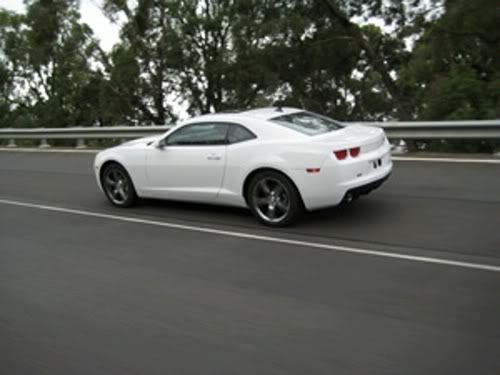
Chevrolet Camaro caught undisguised


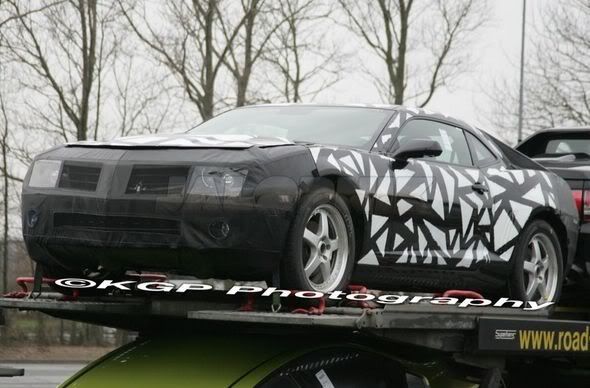
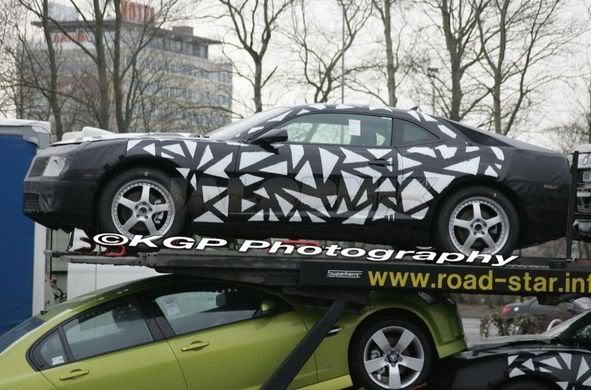
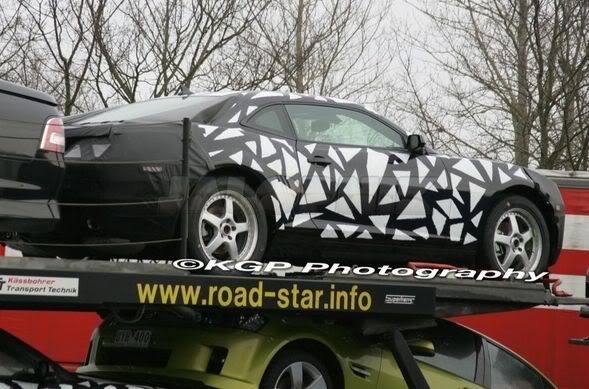
Chevrolet Camaro engineers have been told to ditch disguising Camaro test mules after Bob Lutz said the disguised would muck-up the aerodynamic testing.

The disguised Camaro was caught on a transporter loaded with Holden's in Denmark whilst it was making its way to Sweden, to do some cold-weather testing.

V6 and V8 engines will be available in the coupé variant and soft-top cabriolet with U.S sales starting in 2009.

Spy photographers story:

One of our European operatives caught this full stable of high- performance Holden test cars--including the new Camaro--between Denmark and Sweden, en route to the frigid arctic circle testing grounds. The encounter provided the best, most detailed look at the Camaro, including the first shots of the car's interior. As with the exterior, the production Camaro's interior will remain true to the concept in its overall look and feel. The largest change between the concept and production versions is found on this prototype's center stack, which has an attractive stereo interface that was missing on the show car. The four small analog gages still reside in front of the gear shift lever, and the old-school instrumentation pods have survived the productionizing process largely unscathed. A band of color-keyed trim runs along the dash face, and flares out into the door panels, providing some welcome character and further linking the production Camaro with the concept that has been only teasing us for far too long now.

Our close-up look reveals that these Camaro prototypes were outfitted with 20-inch wheels, and were shod with 245/45 ZR20 Pirello P Zero tires.

Related link:

Thursday, January 3, 2008

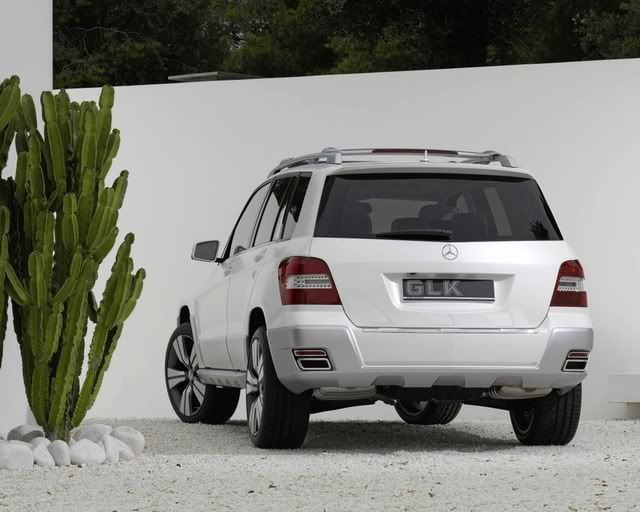
Concept Car: Mercedes Vision GLK Freeside Concept


Stuttgart / Detroit. --- GLK – a combination of letters that has specific connotations. The “G” alludes to the archetypal cross-country vehicle, the “L” intimates luxury and, as in other Mercedes model series, the “K” stands for compactness (German: Kompaktheit). At first sight these three aspects may appear to be mutually incompatible. But on closer inspection they offer the perfect combination as Mercedes-Benz takes its SUV expertise and launches it in a whole new dimension – in the exciting Vision GLK FREESIDE. In January 2008 this compact character will be making its world debut at the Detroit Auto Show, providing a vision of the shape of SUVs to come.

The Vision GLK FREESIDE study, now close to series production, has a distinctive design and combines typical SUV characteristics such as robustness and off-road capability with refined motoring characteristics on “normal” roads. The AGILITY CONTROL suspension ensures excellent handling dynamics and agility, coupled with excellent ride comfort and pioneering active safety. A high-strength bodyshell forms the backbone of this model and also ensures other key characteristics: the driving stability and virtual absence of vibration and noise, whatever the conditions, are compelling, and the passive safety, as you expect from the brand, is of the highest standard.

The economical and environmentally friendly new-generation BLUETEC four-cylinder engine, combined with the 7G-TRONIC seven-speed automatic transmission and the new 4MATIC all-wheel drive, ensures highly appealing performance. The compact concept vehicle, measuring 14.8 feet in length, also boasts technology usually reserved for higher vehicle classes. Features not only include the anticipatory PRE-SAFE® safety concept and the Intelligent Light System (ILS), but also the intuitively controlled COMAND APS infotainment center, a rear-seat entertainment system with two screens and THERMOTRONIC 3-zone automatic climate control.

Extremely attractive in stylistic terms, this vision of a future compact SUV, a vehicle packed with character, succeeds by combining the angular design of the original G-Class with typical design features from the contemporary Mercedes-Benz passenger car range. The interior of the Vision GLK FREESIDE complements the expressive body design and impresses with high-quality materials and an ergonomically coherent overall concept, instantly conveying that typical Mercedes ambiance.

The Vision GLK FREESIDE is to undergo its first test of character at the NAIAS in Detroit. “The Vision GLK illustrates the logical way in which our extremely successful model strategy can be continued in the SUV segment,” commented Dr. Dieter Zetsche, CEO of Daimler AG. Dr. Zetsche has a very close connection with the compact and distinctive Vision GLK FREESIDE, based on his time as a vehicle developer back in the mid-1980s. One of Dr. Zetsche’s areas of responsibility at that time was the development of the legendary G-Class. Looking back, he explained, “The needs profiles are different now. But there’s one thing that hasn’t changed: if a Mercedes has a G in its name, it has to perform exceptionally in all conditions.”

Vision GLK FREESIDE: Expressive, Distinctive, Independent:

Stylistic borrowings from the forefather of all Mercedes-Benz SUVs give the Vision GLK FREESIDE a special positioning. Head of design Prof. Peter Pfeiffer put it in a nutshell, “With the G-Class we created a styling icon which has been the benchmark for almost 30 years. Combining this bold design with the latest Mercedes-Benz design elements makes the Vision GLK FREESIDE a vehicle of genuine character.”

Indeed, never before has there been such a distinctively expressive vision of tomorrow’s compact SUV. Bringing together the angular original design with the typical design features found in all contemporary Mercedes-Benz passenger cars creates a thrilling allure. Here the company’s unmistakable design idiom, with its interplay of taut lines and large, expansive surfaces, is combined with the typical body features of a functional off-road vehicle, such as short overhangs, an upright front end, slim roof pillars, a steeply raked windscreen and taut roof lines. Specially manufactured 20-inch light-alloy wheels and muscular wheel arches add an extra touch of power and charisma to the Vision GLK FREESIDE.

The vehicle’s body design is by no means an end in itself. It allows the typical advantages of an off-road vehicle to be introduced to the road-oriented, compact SUV class for the first time. Large angles of approach and departure plus good ground clearance make off-road ventures a joy. The outstandingly clear layout of the body and the good all-round visibility, combined with the raised seating position, increases the vehicle’s suitability for everyday on-road use and ensures relaxed driving even in dense city traffic.

The Vision GLK FREESIDE’s convincing design concept is reinforced by the special effect “diamond-white magno” paintwork. Unlike conventional metallic paintwork, a matte clearcoat protects the surface here. The detachable body parts, in gloss sterling silver, produce a charming contrast and give the study an even more exclusive look.

The Interior: Trend-Setter in the Compact Premium Segment:

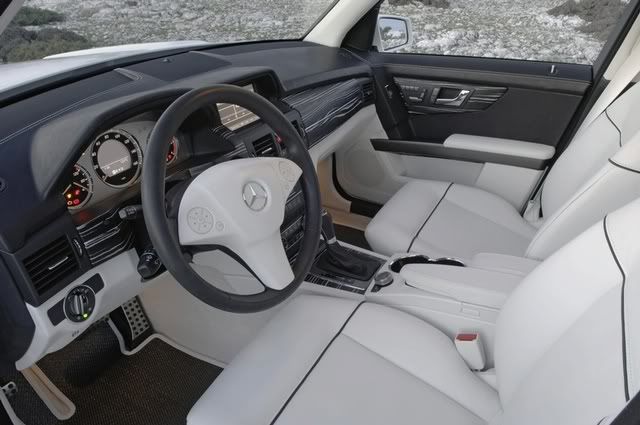
The distinctive looks of the exterior are seamlessly continued inside the SUV study. A thrilling stylistic contrast is produced by the juxtaposition of two formally different worlds. On the one hand the Vision GLK FREESIDE offers a high-quality and comfortable interior with impressive materials and precise detailing. On the other hand the contemporary treatment of the surfaces brings the latest in Mercedes design to the interior. The dashboard is the dominant element here, its wide, emphatically three-dimensional trim lending the generous interior an additional sense of width. The main focus is an elegant trim tier in matte, anthracite-colored cebrano wood with white grain and a precision-tailored chrome trim strip. This element, with its rich contrasts, extends across the full width of the interior and divides the main body of the dashboard into three horizontal planes. The upper area is trimmed in black leather and encompasses the instrument cluster and the static COMAND APS central display.

The lower area, like the tunnel and the footwells, echoes the color scheme of the exterior paintwork. The seats and the lower part of the door are trimmed in specially coated white leather which, like the “diamond-white magno” paintwork, has a matte gloss finish. Treating the natural leather in this way not only produces a stunning look but gives it a velvety soft, skin-friendly, easy-grip surface. Black piping adds to the interesting black and white contrasts. The driver’s armrest and the COMAND APS controller are placed in the optimum ergonomic position. Control of the individual menus is intuitive, following the highly familiar control logic used in the S-Class. Additional shortcut buttons make it easier to access the most important main functions.

The occupants are protected by a comprehensive safety concept, based on a high-strength passenger cell and energy-absorbing deformation zones at the front and rear. The protective program includes front airbags, sidebags and windowbags, plus a kneebag for the driver and crash-responsive head restraints.

New BLUETEC Four-Cylinder Powerplant with AdBlue Injection:

The Vision GLK FREESIDE is powered by a new-generation diesel engine. The four-cylinder unit, with a 2.2-litre displacement, reflects the study vehicle’s dynamic basic concept and allows impressive performance figures with an output of 125 kW/168bhp SAE net, plus reduced consumption and reduced emissions. The technical features of the extremely compact and smooth CDI powerplant with rear camshaft drive include fourth-generation common-rail direct injection with an injection pressure of 2,000 bar and a two-stage turbocharger system.

The modular BLUETEC emission control system has been enhanced by Mercedes-Benz and the most efficient version has been combined for the first time with a four-cylinder engine. "BLUETEC gives us a technology that makes it possible for us to combine the high efficiency and impressive torque of modern diesel engines with extremely low emissions – a perfect propulsion unit for a compact SUV like the GLK," declares Dr. Thomas Weber, member of the Board of Management of Daimler AG and responsible for corporate research and the development of Mercedes-Benz Cars.

The focus of BLUETEC technology is on ensuring the greatest possible reduction in nitrogen oxide emissions. This is the only exhaust gas component that is intrinsically higher in diesel engines than in petrol engines. In addition to an oxidizing catalytic converter and a maintenance-free particulate filter, an SCR catalytic converter is also used. AdBlue, a harmless, aqueous urea solution, is injected into the exhaust gas stream. This converts up to 80 percent of the nitrogen oxides into harmless nitrogen and water. Here the study highlights the way in which compact four-cylinder diesel models can also meet the most stringent emissions limits, even those specified by EU6, which will apply to all new vehicles from 2015. By then today’s EU4 nitrogen oxide limits will have to be reduced by around another 70 percent to 0.08 g/km. Even the strict US BIN 5 limits and the Californian LEV2 regulations would not present a problem for the Vision GLK FREESIDE.

Superior Dynamic Handling Thanks to Cutting-Edge 4MATIC Drivetrain:

The new 4MATIC drivetrain in the Vision GLK FREESIDE is one of the most powerful all-wheel-drive systems. Thanks to the compact, lightweight and friction-optimized basic design, with a longitudinally installed engine and block-design main transmission and transfer case, it offers various advantages over other systems with a transversely installed drive unit. The fuel consumption, for example, is around the level of a comparable, conventionally driven vehicle. The minimal vibration and noise levels rival those of today’s luxury-class models.
The 45:55 percent basic distribution of the drive torque between the front and rear axle plus the ESP®, ASR and 4ETS dynamic handling control systems ensure effortlessly superior and predictable performance in all conditions. Optimum traction, the greatest driving stability and the best handling are assured at all times. The newly developed multiple-disc clutch in the central differential supports the system where the friction between the tires and the road surface is particularly low, for example on snow or ice. A basic partial locking force of 50 Newton meters between the front and rear axles produces a significant increase in traction, while maintaining the high level of driving stability.

The “G” button in the center console increases the Vision GLK FREESIDE’s aggression when required on rough terrain. Pressing the button activates a special transmission mode which varies the 7G-TRONIC’s shift points, adjusts to “softer” accelerator characteristics and activates the ESP’s off-road function. A manual shift mode is also available – gears are changed using the shift paddles behind the steering wheel. A further switch activates the Downhill Speed Regulation (DSR), which automatically maintains a pre-selected speed on steep downhill inclines.

Pioneering Chassis Concept Unites Different Worlds of Driving:

The Vision GLK FREESIDE’s AGILITY CONTROL suspension resolves a conflict of objectives which particularly affects the SUV class, where chassis engineers want to create a vehicle which is both sportily agile and comfortably smooth yet one which can also cope with off-road terrain. If the focus is on sportily active handling, the springs and above all the shock absorbers have to demonstrate a certain firmness, which precludes access to the brand’s typical suspension comfort and limits the off-road options. If the vehicle is set up with softer dampers to ensure suspension comfort and off-road capability, dynamic handling naturally suffers. The solution is “amplitude-dependent damping”: the damping forces of the shock absorber are configured to respond flexibly rather than lineally.

In normal driving mode on moderately contoured roads or on slow off-road tours the system responds softly, enhancing both the comfort of the occupants and the off-road capability. To ensure that this level of comfort is retained in the face of hard driving or abrupt evasion maneuvers, in these situations the dampers deliver a harder performance, ensuring optimum driving stability. The driver of the Vision GLK is supported by speed-sensitive power steering which ensures the optimum steering assistance for the given situation. Parking or maneuvering off-road are easy exercises because the greatest possible power assistance is on hand. At higher speeds the assistance is reduced in favor of greater driving stability.

Vision GLK FREESIDE: Continuing a Success Story:

Since the launch of the legendary G-Class in 1979, Mercedes-Benz has been a leader in the field of off-road vehicles. With the first generation of the ML-Class, which appeared in 1997, Mercedes-Benz marked out the contemporary sports utility vehicle segment. Including the latest generation of this model, which made its debut in 2005, this model series is one of the most successful premium SUVs in the world, with around 900,000 vehicles sold. The GL-Class in turn has occupied the top spot in the overall SUV world since 2006, its occupants traveling first-class whatever the conditions, whether on or off the road. The Vision GLK FREESIDE now demonstrates how the expertise garnered in the course of creating this sequence of models can be translated into a compact format. The new compact character, in other words, is in the best of company – just like the production model, which is to be launched in Europe in fall 2008, followed by the U.S. in January 2009.

Related link:

Wednesday, January 2, 2008

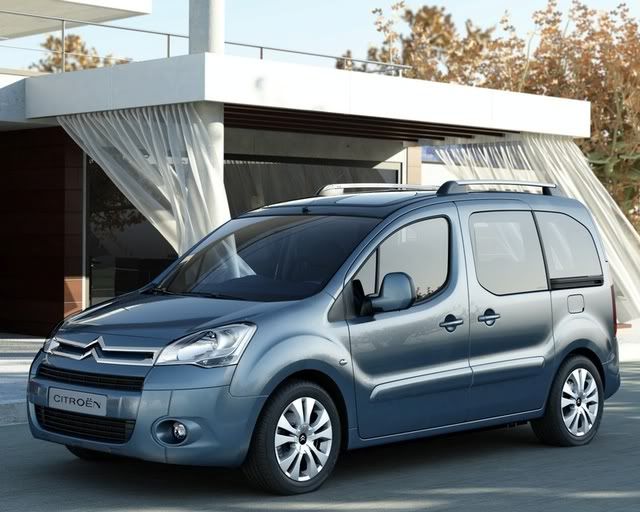
New Car: 2008 Citroen Berlingo/Peugeot Partner


Citroen Berlingo:

With the Berlingo, Citroën created the leisure activity vehicle segment and launched a new concept in compact vans. Its innovative qualities appealed to private and professional customers alike, making it a huge commercial success. It has been the clear leader in the leisure activity vehicle segment in Europe (17 countries) since 2003. Worldwide, Citroën has sold more than 1,760,000 Berlingos (cars and LCVs) since launch in 1996.

The New Berlingo will go on sale in second-half 2008. It will be sold alongside the current Berlingo model, which will be available in some countries as an entry-level offering called “Berlingo First”. This strategy will enable the Marque to better meet the highly diverse needs of its customers.

The comfort of a saloon and the practicality of an MPV:

Adapting to all situations, the Berlingo meets customers’ growing needs for freedom and versatility in use.

The New Berlingo retains the ultra-functional, family-friendly character of the original and strengthens its personality with dynamic, upmarket styling that also identifies it immediately as a Citroën. It boasts saloon-like levels of comfort – acoustics in particular – and MPV-style practicality (tailgate with opening window, three independent removable seats in row two, a redesigned Modutop® and an overhead storage rack). It is also a great car to drive, thanks to a longer wheelbase and C4 Picasso running gear.

And with its 110 bhp HDi diesel engine fitted with a particulate filter (DPFS), the New Berlingo carries the Airdream environmental signature that denotes the greenest models in Citroën’s range.

Practical and functional, yet strong on styling and comfort:

The compact van version of the New Berlingo is big on load volume, payload and versatility, which are key features for professionals. It has a huge loading area (3.3 m3, up to 850 kg of payload and 1.8 m of useful length) that can take two Europallets width-wise, and is available with an Extenso® modular cabin, able to transport loads up to 3 metres long and increase useful load to 3.7 m3 or seat three people at the front.

The New Berlingo also offers passengers saloon-like levels of equipment for comfort and driving pleasure, including hill start assist, a height- and reach-adjustable steering wheel, C4 Picasso running gear and ESP. The New Berlingo is a modern working tool that confers prestige on its owners through its robust and dynamic styling.

The launch of the New Berlingo follows those of new Jumper, new Jumpy and Citroën’s latest compact van, Nemo. Citroën thus offers professionals the largest and most complete line-up of light commercial vehicles in its history, covering a wide range of needs, from 2.5 m3 to 17 m3 of load volume and up to two tonnes of payload.

Peugeot Partner:

Launched in 1996, the Peugeot Partner has been extremely successful in both its small van and MPV versions, with regular year on year increases in global sales over the past eleven years. Capitalising on the success of the first generation Peugeot Partner, Peugeot will launch a new version of the Partner in the second part of 2008.

With the launch of the new Partner, the first generation Partner model will, however, continue to be sold in certain countries with a reduced range of models and will be known as the Partner Origin.

Professional efficiency down to the last detail:

With a refreshing and dynamic style which is perfectly adapted to the demands of its professional customer base, both with regards to quality, durability and efficiency, the new Partner is the perfect working companion due to its versatility and value for money. In terms of practicality, the new Partner has a maximum load capacity which will be a new reference point in the small van segment. With a length of 4.38m the new Partner has a load volume of 3.3m3 and a maximum payload of up to 850kg. The load area length of 1.8m can also be extended to 3m thanks to the new innovative Multi-Flex passenger seat, giving 400 litres of additional load space. This innovative feature allows three people to sit in the front which is the first time this option has been available in the small van segment.

Thanks to the use of the Peugeot 308 power train, the new Partner benefits from improved acoustic comfort, combined with an ergonomic driving position and excellent visibility. This all combines to give the new Partner a level of quality which will symbolise this new generation of small vans.

The new Partner puts the finishing touches to the complete enhancement and renewal of the Peugeot range of light commercial vehicles. The new and extended range which is even more innovative, offers a range of vehicles from 2.5m3 to 17m3, consisting of the Bipper, Partner Origin, new Partner, Expert and Boxer.

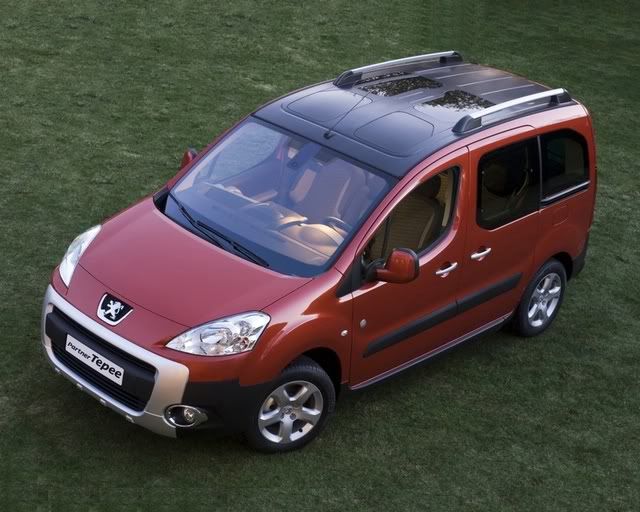
Peugeot Partner Tepee: the MPV that lets you enjoy the freedom of the open road:

The new Partner Tepee MPV represents the next generation of a concept invented by Peugeot in 1996. The Partner Tepee is a multi-usage vehicle which is practical and which has a modern and original style both, on the inside and the outside. Its modular styling will appeal to customers requiring space and versatility. Most notably, it has a new Zenith multi-purpose roof providing even more light into the passenger compartment, three individual folding rear seats, greater interior space and driving qualities worthy of a modern hatchback car.

Adventure seekers, however, will also love its all-terrain capabilities and the personalised design of the Partner Tepee Outdoor.

Fiat 500 at the 2008 F1 Grand Prix in Australia

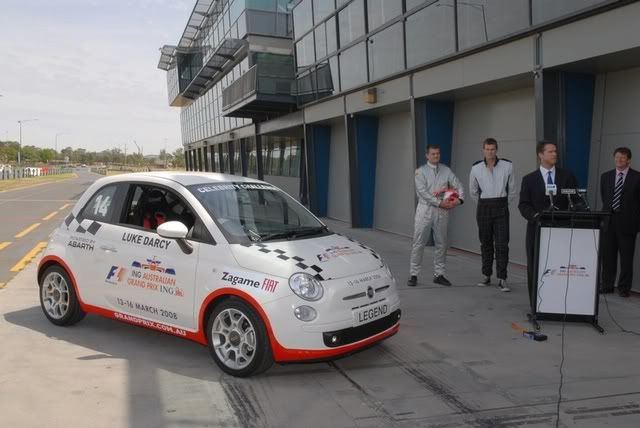
The car that’s taking the world by storm – the Fiat 500 - is to be driven in the Celebrity Challenge race at the 2008 FORMULA 1™ ING Australian Grand Prix in Melbourne. The announcement is the latest in a series of innovations unveiled by the Australian Grand Prix Corporation in recent months, all aimed at ensuring the Albert Park event will be the most exciting in its thirteen year history.

“In keeping with our fresh approach to the 2008 Grand Prix there could be no better choice of car for the celebrity race than the Fiat 500,” said Drew Ward, CEO of the Australian Grand Prix Corporation.

The car unveiled is the first Fiat 500 to be seen in Australia or New Zealand; the first right hand drive model to be seen anywhere in the world; and the first racing version to be seen anywhere in the world.

“Since its launch just four months ago, this Italian gem has set the motoring world on fire,” said Mr Ward. Spectators at next year’s Grand Prix will not only get the chance to witness Formula One, the V8 Supercars and a full-on two-hour Kiss concert extravaganza, but now they’ll be among the first in the country to see the all-new Fiat 500 in action.”

Famous names from Australian sport will be given the honour of racing the vehicle, with a ‘Sporting Legends’ theme set to inject plenty of competition into next year’s Celebrity Challenge. Australian Rules star Luke Darcy and Wallaby speedster Ben Tune were announced today as the latest drivers in the all-star line-up. They join former Collingwood captain Nathan Buckley on the starting grid at the March 13 – 16 event, with plenty more big names to come.

“After so many years of battling it out on the footy field, I can’t wait to get behind the wheel at Albert Park to take part in a completely different kind of battle," said Darcy, who enjoyed a 226-game career with the Western Bulldogs. “Now that I've hung the boots up, it's just awesome to be able to have the opportunity to do something like this."

Australian Rugby Union winger Tune, who was famous for his fast finishes on the field, is hoping to earn the same reputation on the race track. “I’ve always wanted to take part in the Celebrity Challenge,” said Tune. “To be given the chance to experience this with so many fantastic sports people is an added bonus. I hope sports fans from every code will come down to Albert Park in March to see us race.”

The Fiat 500 is the most sought after car in Europe, having won numerous awards headed by 2008 European Car of the Year. Australian and New Zealand production has already been snapped up for the first three months of supply, even without prices and specs announced.

“With its outstanding advance sales, its unique parentage and cheeky good looks, the new Fiat 500 is already a celebrity in its own right,” said David Stone, General Manager for Fiat Cars in Australia. “So it’s entirely appropriate that, as Australia’s most eagerly awaited new car for 2008, the Fiat 500 should join forces with Australia’s top sporting celebrities to present a bright, new, exciting face for the Celebrity Challenge. This will be the first time the new Fiat 500 has taken part in motor sport, recreating another part of the original 500’s heritage, and given the huge interest in the new 500 around the world, it will further raise the profile of the Grand Prix as TV viewers tune in to see the spectacle of the new 500 in competition for the first time! The new Fiat 500 is the heart and soul of Fiat. It is both an extremely good looking and stylish small car that is unmistakably a Fiat - full of character and spirit. But at the same time it has the design integrity to blend this with cutting edge technology, creating a new benchmark for safety, fuel economy and low emissions. Just as the original 500 was the standard against which all small cars were judged in the 1950s, so the new 500 is the perfect small car for the 21st century.”

FIAT 500 UK pricing

FIAT 500 production expands again

FIAT 500 crash test results

Private importers import FIAT 500 in UK

FIAT 500 production expands

FIAT 500 goes off-road

FIAT 500 Abarth expected in Tokyo

FIAT 500 goes on sale in France & Italy

FIAT 500 commercial shoot pictures

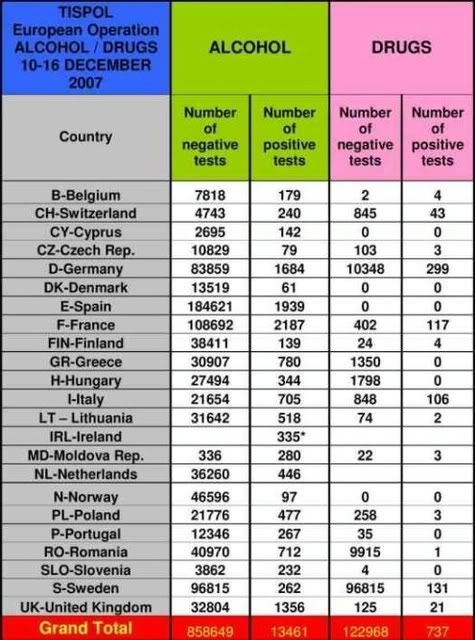
13,400 Europeans caught drink-driving

Over 850,000 European motorists were checked in the traffic police operation “Tispol Drink and Drug” just in a single week between December 10th and December 16th. The Europe-wide clampdown on drink driving saw police check over drivers in 23 countries by Tispol, the European Traffic Police Network that is co-financed by the European Commission.

The legal alcohol limit for drivers varies from country to country, but the operation caught more than 13,400 motorists with positive drink test. Most drunk drivers are reported to be in France, followed by Spain, Germany and UK. As opposed to them, Denmark, Czech Republic and Norway have less than 100 drunk drivers caught in that week. Most checks were conducted in Spain, twice more than in Germany. But there is disturbing fact, that some 737 gave a positive test to drugs while driving. The biggest number, 299, is in Germany, followed by Sweden, France and Italy.

"The fact that in a single week we caught over 13,000 drink drivers on Europe's roads shows the clear need for operations like this", said TISPOL President Adam Briggs. Around 40,000 people a year are killed on Europe's roads and drink driving is one of the major causes. The European Commission aims to reduce that number with over 50% by the end of this decade.