Find one of the largest information about Sport Cars to increase your Sport Cars here

Thursday, November 8, 2007

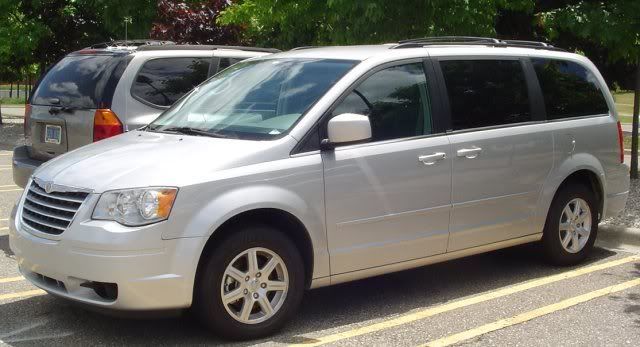
Chrysler Grand Voyager pricing announced (UK)

Chrysler is hoping to reinvigorate sales of its large MPV, the Grand Voyager, with this all-new incarnation, which goes on sale in the UK in February 2008.

Once the vehicle of choice for aspiration large families and semi-plush cab firms, Chrysler’s big MPV has been hit by more luxurious SUVs and, more crucially, increased flexibility and practicality offered by newer, smaller models.

The new model – based on an all-new platform – is designed to buck the trend. In particular, the GV now has two seating systems available: ‘Stow ‘n’ Go’, which allows the rear two rows to be hidden in the floor, and ‘Swivel ‘n’ Go’, which features a second row than can turn 180 degrees, floor storage bins and a removable table between the second and third rows.

The kit list has been tweaked too; new features include heated seats in the first two rows, a removable torch in the rear quarter panel, movable LED reading lamps and three-zone climate control. The options list also includes a dual-DVD system with twin screens, and Chrysler’s MyGIG hard disk-based audio player.

Chrysler has clearly been focusing on practicality, because the Grand Voyager’s mechanicals sound pretty ordinary. It’s only available with a six-speed automatic gearbox, and the engine of choice (one of only two available) will be a 2.8-litre turbodiesel unit, producing 161bhp and 266lb ft of torque.

The top-of-the-range Limited model is also available with a 3.8-litre V6 petrol engine, for the same £32,995 price as the diesel version. But with only 190bhp and 230lb ft on tap, its sales figures might make its model name rather too apt for its own good.

Prices start from the same level as the outgoing model, which means you have to pay £25,995 for the base model.

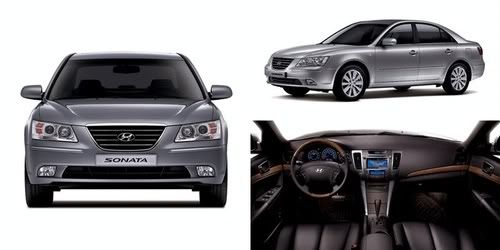
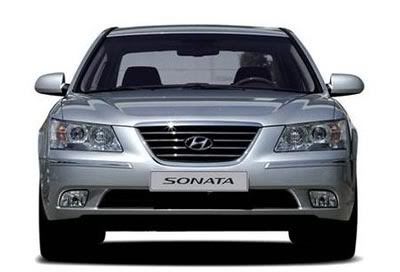
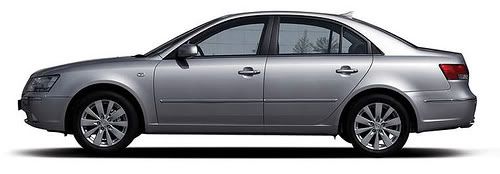
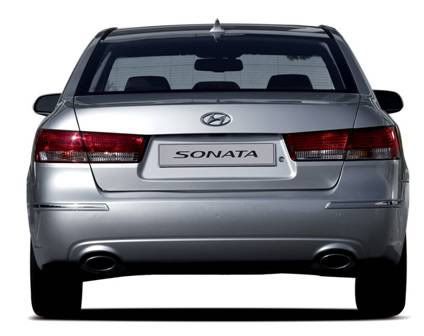
New Car: 2009 Hyundai Sonata facelift


Do not change what is not broken. Hyundai designers took his saying to heart for the mid-cycle facelift for the best selling sedan on the Korean peninsula. The bumper, headlamps and radiator grille received some minor touch-ups, while new alloy wheels were added and the waistline molding, rear bumper and taillight clusters were adjusted to resemble the front design more than before.

More drastic changes are found under the hood, as the Sonata Transform is the first model to receive the second generation Theta engine. The Theta II engine delivers more horsepower and improves acceleration while maintaining fuel economy, better yet it even improves mileage and lowers emissions. The performance boost has been attained through the addition of a variable induction system and a variable valve timing system.

The interior has been redesigned to create a more upscale feeling through a new crash pad, new floor console and door trim.The new Sonata is on sale now in Korea, export models (which may differ slightly from Korean models) will start shipping early 2008. The car won't launch in the UK due to excess stock of the pre-facelift model.

2009 Hyundai Coupé/Tiburon; undisguised


We have posted today these amazing shots of the all-new Hyundai rear-wheel-drive sports coupe. Snapped during a market research event, the Hyundai is standing next to its target competitor, the Ford Mustang. In an effort to minimize preconceived biases, both vehicles are painted exactly the same color as well as having all emblems covered. Additionally, participants are given a questionnaire about the two vehicles regarding their impressions in which they refer to the vehicles by a given letter. As seen in these photos, the Hyundai is wearing a sign on the front bumper with the letter F.

Although spy photos taken from research clinics are nothing new, these are the clearest photos we have seen from such an event. Normally, the specially selected participants of these market research events are obviously prohibited to have cameras. But judging by the vantage point of the photos it seems the spy photographer may have been an insider with access to the rest of the facility allowing a view from above the curtains.

The presence of the Mustang as the target competitor confirms the sports coupe will receive a V8 engine (the 4.6-liter from the Genesis) as previously reported. Codenamed BK, but often referred to as the Hyundai Mustang by Hyundai insiders, the sports coupe replaces the Tiburon but will most likely be given a new name since it has nothing in common with its predecessor as well as emphasizing a high performance rear-wheel-drive nature. The Hyundai sports coupe which is based on the BH/Genesis platform will first arrive in Asia in late 2008 or 2009, and arrive in the U.S. for the 2010 model year. A convertible version is expected to follow.

According to a participant of the focus group, two engines mentioned were a 2.0-liter trubo with 215hp and 217 ft-lbs of torque priced at $19,000 and a 3.8-liter V6 with 300hp and 280 ft-lbs of torque starting at $25,900. There was no mention of a V8 engine but that doesn't mean it doesn't exist. However, the focus group was conducted in June of this year which leaves plenty of time for changes. Other features mentioned include Ipod integration in center console, bluetooth function through head unit, sunroof, mirror mounted LED turn signals and limited slip.

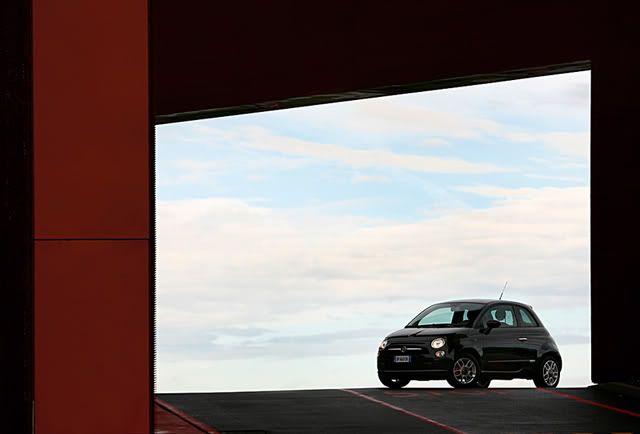
FIAT 500 pricing announced (UK)

Fiat Group Automobiles UK Ltd has just announced prices of the eagerly-awaited new Fiat 500, which goes on sale here in January.

With a starting price of just £7,900 OTR, the new Fiat 500 represents outstanding value for money and positions the car well below its benchmark rivals. At the top end of the range, a highly specified version with a larger engine costs only £10,700 – an OTR price that includes air conditioning and alloy wheels as standard.

Available with a choice of three frugal, ultra-low emissions, Euro 5-ready engines: 69 bhp 1.2-litre and 100 bhp 1.4-litre petrol, or 75 bhp 1.3-litre MultiJet turbodiesel, the new Fiat 500 can be ordered in three different trim levels – Pop, Sport and Lounge.

Standard equipment in the entry-level Pop includes ABS anti-lock brakes with EBD, driver, passenger, side and driver’s knee airbags, radio/CD/MP3 player, power steering, electric mirrors, colour coded bumpers and chrome-plated door handles. The extensive options list includes ESP, glass sunroof, metallic paint and parking sensors.Sport and Lounge versions start at £9,300, while specifying a larger engine in any trim level adds £1,400. Standard equipment on both Sport and Lounge versions includes the Blue & MeTM hands-free media system, air conditioning and 15” alloy wheels. Sport specification includes a rear roof spoiler, fog lights, sports interior and dark tinted rear windows, while Lounge trim includes a split, folding rear seat and fixed glass roof.

The simple pricing structure means that any combination of car is possible – customers simply start with a 1.2 Pop and add £1,400 for a more powerful engine, £1,400 for a higher trim level, or £2,800 for any combination of both. A huge list of style options – created specifically to offer customers wide-ranging opportunities for personalising the interior and exterior of their vehicles – is also available. “There has been widespread speculation about Fiat 500 prices this year and we’re delighted now to be able to reveal them,” says Elena Bernardelli, marketing director, Fiat Group Automobiles UK.

“We wanted to create a classless car for everyone, that was not just about being a well-known badge, and with this pricing structure I believe we have introduced a model to the UK that will be within the reach of a wide range of customers.”The Fiat 500 goes on sale through Fiat’s 162-strong UK dealer network in January 2008.

On-the-road pricing for the range is as follows:

1.2 Pop - £7,900


1.2 Sport - £9,300


1.2 Lounge - £9,300


1.3 MultiJet Pop - £9,300


1.4 Pop - £9,300


1.3 MultiJet Sport - £10,700


1.3 MultiJet Lounge - £10,700


1.4 Sport - £10,700


1.4 Lounge - £10,700

Sunday, November 4, 2007

Ford Focus Facelift caught...

On a brochure shoot! An amateur photographer could a production ready Ford Focus facelift in a busy town of Southern Spain which isn't a suitable place for a brochure shoot.

The revised Focus will be on sale in the UK next spring.

Press Release

Mystery Car: Mini Clubman S mule


Our team of spy photographers captured this unusual Mini Clubman S mule in Germany.

Before the 2007 Mini came out, there was a similar Mini Cooper S hatchback test mule wearing the exact same wheels which was sighted in England back in 2000.

We heard rumors that Mini could be testing a supercharged version of the "S" because the front lower air intake is longer and taller compared to the regular Clubman S .There are pieces black tape around the corners of the front bumper and wheel arches. Also there is a little apron located on the bottom of the front bumper.

So could Mini be testing a Cooper/Clubman S supercharged? Its possible and if it is, expect to see it on sale in late 2008/early 2009.

New Car: 2008 FIAT Siena


60 projects after little more than studied and two years and way of work, at last, Fiat Brazil launched the new generation of the Siena. Although its lines to be bolder and different of the found ones in Palio, the model still counts on the trend of style baptized for the mark of family feeling, also found in the Punto and future in the Linea - yes, Fiat disclosed officially that the sedan will arrives a year later which the new Siena clearly was inspired by. The model will have two versions of finishing and four types of engine;ELX (1.0 l, 1.4 l and 1.4 l Tetrafuel) and HLX (1.8 l). With a new it would carroceria, it received an identity proper. Its wider bumpers pass the impression of a bigger vehicle. The chromium plating, that is present in almost all the car and will be serial in the four offered versions, can be found in the frame of the grating and the lighthouses. The back is higher than of the previous generation, counts now on horizontal lanterns that go of the cover of the trunk until the lateral. Frisos also chromed is part of the posterior pára-shock, beyond the frame that involves new logotipo of the mark, placed in the center of the back cover. The renewed interior has coated fabric banks with discreter colors, stock markets in the behind part of the seats and one third support of regulable head. In the entrance version, the ELX, the panel of instruments have speedometer, count-turns, gradual marker of temperature with deep black color and a digital display that shows temperature, kilometrage, level of fuel and clock. The finishing is equal in the versions equipped with propellant 1.0 l, 1.4 l or 1.4 l Tetrafuel. The ELX counts on a vast list that serial equipment, as projecting with height regulation, has consoled central office with door-objects, door-cups, mirror in the pára-sun of the driver and the passenger, lateral Follow Me Home system.Equipment more looked by the customers as COMPACT DISC to player MP3/WMA, ABS, glasses and electric constraints, air-conditional hydraulical direction and however, continues being optional. The new Siena will have four options of motorization; 1.0 ELX Flex, 8 cv more powerful, that relieve 73 cv supplied with gasoline and 75 cv with alcohol; 1,4 ELX Flex, with 5 cv more than the previous version, being with 85 cv (gasoline) and 86 cv (alcohol); 1.4 ELX Tetrafuel with 80 cv (gasoline and gasoline without alcohol), 81 cv (alcohol) and 68 cv (GNV); 1.8 e HLX Flex capable to develop 112 cv with gasoline and 114 cv with alcohol. The new Siena was presented to the press and they evaluated the 1.4 version ELX Flex which can do little more than 40 km on 1 tank of fuel. Sales in January to October of this year, Fiat sold 71,219 units, a average of 7,000 vehicles a month.

With the new generation, the mark intends to have a growth around 26% 31% in 2008. To increase its participation in the market, that today is of 26%, the assembly plant intends to invest to R$ 5 billion 2008 to 2010, passing its production of 700 000 to 1 million of cars each year. The Siena will arrive on the market from 14th November and will not have any changes to the price for the entry level model.

1.0 Fire Flex - R$ 28,920

1.0 ELX Flex - R$ 33,660

1.4 ELX Flex - R$ 36,600

1.4 ELX Tetrafuel - R$ 44,960

1.8 HLX Flex - R$ 44,850

Friday, November 2, 2007

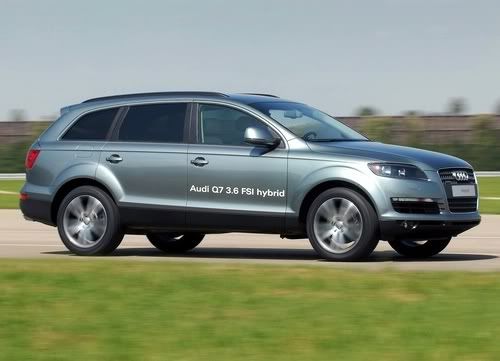
Audi Q7 Hybrid on sale by late 2008

Petrol/electric hybrid Audi SUV waits in the wings as new cleaner, more economical TDI engine joins the range

Updated TDI engine first seen in A5 coupe is adopted by Q7, bringing reduced emissions, increased power and torque and improved performance

Revised Q7 3.0 TDI quattro available to order now in standard, SE and S line trim priced from £38,075 OTR to £41,475 OTR
240PS@4,000rpm, 550Nm from 1,750rpm to 2,750rpm, 0-62mph in 8.5 seconds, top speed 134mph, 34.9mpg, CO2 260g/km

Working Q7 petrol/electric hybrid prototype reduces consumption and emissions by over 20 per cent – production version is expected to go on sale in certain markets towards the end of 2008

The seven-seat Audi Q7 SUV benefits from a ‘win-win’ upgrade this week courtesy of a new version of its 3.0-litre V6 TDI engine which brings lower emissions, higher power and torque and improved performance and fuel economy.

The even more efficient 2008 Model Year Q7 3.0 TDI quattro, which is also now equipped with an exhaust-cleansing Diesel Particulate Filter (DPF), is available for order in standard, SE and S line trim priced from £38,075 OTR. It forms part of a Q7 development programme which also includes petrol/electric hybrid versions that slash fuel consumption and emissions by over 20 per cent.

Featuring an advanced common rail direct fuel injection system using sophisticated piezoelectric quartz crystal technology, the upgraded V6 TDI engine benefits from enhancements that boost combined cycle fuel economy in the Q7 3.0 TDI quattro from 33.6mpg to 34.9mpg, reduce CO2 output from 279g/km to 260g/km and bring down the 0-62mph time by 0.6 seconds to 8.5 seconds. Power rises from 233PS to 240PS, delivered at 4,000rpm, and torque increases from 500Nm to an even healthier 550Nm, available from just 1,750rpm.

Diesel is of course far from the only source of responsibly delivered power to be championed by the Vorsprung durch Technik brand. As well as exploring the possibilities opened up by second generation ‘future fuels’ such as the biomass-to-liquid (BTL) SunFuel, Audi is also testing fully operational prototypes running on bioethanol (E85), CNG (compressed natural gas) and petrol/electric hybrid power.

Q7 hybrid reduces consumption and emissions by over 20 per cent.
The Q7 hybrid is expected to go on sale in its first markets towards the end of 2008, combining its familiar 280PS 3.6-litre FSI petrol engine with an electric motor situated in the drivetrain powered by a 288-volt nickel metal hydride (NiMH) battery, which adds a further 51PS. The Q7 hybrid reduces fuel consumption, and therefore C02 output, by approximately 23 per cent compared with the Q7 3.6 FSI as we know it today.

Designed in a parallel configuration in which all major assemblies are arranged in line, helping to reduce weight and energy loss, the 3.6-litre FSI V6 with its 375 Nm torque peak is boosted by up to 285Nm by the electric motor. Channelled via a six-speed tiptronic gearbox and through the quattro four-wheel-drive system with asymmetric 40% front / 60% rear torque split, this joint output enables a 0-62mph acceleration time of just 7.6 seconds (standard Q7 3.6 FSI 8.5 seconds) and combined fuel consumption of 28.8mpg (standard Q7 3.6 FSI 22.2mpg). The Q7 3.6 FSI’s 309g/km output is reduced to 237g/km thanks to the electric motor and a number of revisions to ancillaries such as the power steering pump.

Fundamentally, three driving modes are possible. The FSI engine and the electric motor can each work on their own as the drive unit, or the vehicle can combine the power of the two for acceleration. In this mode, the petrol engine is responsible for basic operation, whereby it also needs to supply energy to the battery.

Recuperation conserves energyThe electric motor on the other hand can operate independently and almost inaudibly at speeds of up to 30mph, considerably reducing exhaust and noise emissions in built up areas. It is also able to feed kinetic energy back into the system and so recharge the battery when the vehicle is braked or coasting. During this operation, known as recuperation, the motor reverses its function to become an alternator.

The capacity of the NiMH battery allows the vehicle to be driven up to 1.2 miles on purely electrical power – coasting and braking feed additional energy into the system. When the capacity limit of the battery has been reached, the combustion engine is activated to recharge the battery. Through regeneration measures such as these, the Audi Q7 hybrid recuperates about 720 kWh of energy a year – approximately a sixth of what a four-person household uses – based on an average of 12,000 miles per annum.

If the Audi Q7 hybrid is coasting without the accelerator pedal being depressed, the combustion engine is switched off – this is possible at speeds up to 74mph. It is also switched off if the vehicle remains stationary for more than three seconds. To continue the journey, all the driver has to do is to remove his foot from the brake and to depress the accelerator pedal again.

Like the standard Q7, the hybrid also has space for three rows of seats and a large luggage compartment. The battery system that supplies energy to the electric motor is located in the spare wheel recess at the rear of the vehicle. Compared to earlier generations of hybrid vehicles, the electric motor and the battery are extremely lightweight. The battery weighs 69 kg and the hybrid module with the electric motor 40 kg.
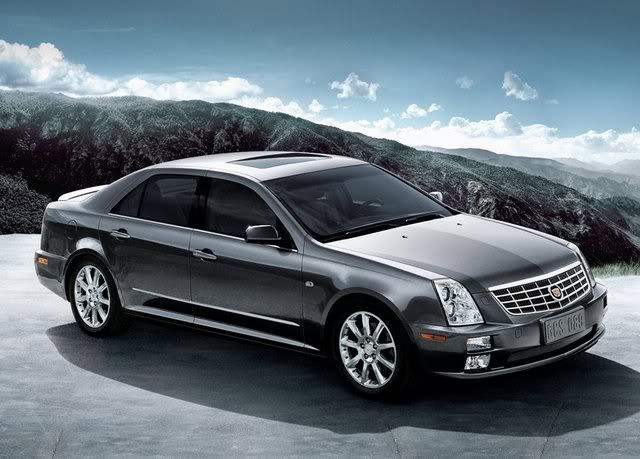
Cadillac SLS enters the Middle East

The Middle East will be the first export market for the Cadillac SLS, the long-wheelbase version of the STS luxury sedan. The car will be revealed at the Middle East International Motor Show in Dubai on 13 November and will reach regional showrooms in the first quarter of 2008.

The newcomer is the third variant in the successful STS range, after STS itself and the high-performance STS-V. The SLS is based on the STS, but with additional design and engineering work, as well as manufacturing, taking place at Shanghai GM’s state-of-the art facilities in Shanghai, China.

"With the arrival of the SLS, the STS family will become a strong three-member line-up. The STS and the STS-V have already established themselves as two successful cars, and the SLS is set to build on their success", said Terry Johnsson, President, General Motors Middle East Operations.“Middle East customers demand excellence in luxury cars and place a premium on quality and performance, the dominant attributes of the SLS, so we pounced on the opportunity to satisfy this demand for long wheelbase luxury sedans”.

Elegance, comfort, and superior driving performance are the SLS keynotes, boasting an array of standard equipment that on many competitors is available only as optional extras.

Externally, the SLS is unmistakably Cadillac in styling. The diamond-faceted contours echo the geometry of its CTS and STS stablemates, mirroring the brand’s rich heritage of art in design, and subtle V-shapes, inspired by Cadillac’s shield badge, are a recurring motif in exterior and interior design execution.

The chrome pentagonal grille is a variant on the classic badge shape and points to the future of Cadillac’s exterior design language, with cues inspired by the Cadillac Sixteen concept car. In typical Cadillac fashion, the SLS excels in interior design, fittings, and finishes, delivering an outstanding experience from any seat. The tone is set by luxurious ambient lighting that bathes the cabin in tranquil and elegant ‘Cadillac White,’ an automotive innovation modelled on first-class air travel.

The SLS has been comprehensively tested in harsh climate and driving conditions such as those it will encounter in the Middle East. Typical of its ability to more than match the environment is the independent tri-zone climate control delivered by the heating, ventilation and air-conditioning system, specially developed for extreme temperatures. Using the Smart Keyless Entry feature, the engine and climate control can be started as far away as 60 metres from the car, ensuring that the perfect cabin environment is always waiting.

The SLS is an important step to grow Cadillac’s presence in a competitive luxury market and its introduction to the Middle East will strengthen the brand’s already powerful position in the region” said Johnsson.

The SLS will be on display on the Cadillac stand at the 9th Middle East Motor Show next month in Dubai.

Cadillac is the luxury vehicle division of General Motors. It was founded in 1902. Cadillac is committed to developing compelling, high-quality vehicles with bold design, breakthrough technology and world-class performance. In doing so, Cadillac has carefully preserved the qualities relevant to luxury consumers and translated them into vehicles with the performance, features and benefits that appeal to 21st-century buyers.

Global sales and market share have made consistent gains in recent years. Cadillac today produces the XLR convertible luxury roadster, the SRX midsize luxury utility, the premium entry level BLS, the CTS luxury sedan, the STS performance luxury sedan, the DTS full-size luxury sedan, a line of supercharged performance V-Series models and the world's most powerful line-up of SUVs: the Escalade, Escalade ESV and Escalade EXT.

The Cadillac brand has been an iconic presence in the Middle East region for over 80 years.

Thursday, November 1, 2007

Scion xD caught in Europe


In the U.S, the Scion brand is a division of Toyota Motor Corporation and targets Generation Y consumers who are young, modern, urban-minded shoppers on a budget. Utilising guerrilla marketing tactics, negotiation-free “pure pricing” in addition to offering a multitude of limited editions with exclusive equipment and dozens of add-on accessories, the Scion brand has been well received. Since its introduction in 2002 the brand did not gain traction until 2004 but currently sells out quickly of its limited production runs. However, the trendy tuning orientated brand has no presence in Europe, but that all could change.

Based upon these spy photos of Scion’s latest model, the xD was caught undergoing mountain testing in the Austrian Alps. It appears Toyota is planning to introduce the brand to the European market although it is uncertain whether it will be done under the Toyota or Scion name.

Provided that Toyota does not replace the engine used in the U.S, the xD would come with a 128 bhp 1.8-litre 4-cylinder engine mated with a five-speed manual transmission. Positioned as the replacement model for the Scion xA, the xD is basically a Toyota Yaris 5-door or more specifically a rebadged Toyota IST from the Japanese market but because the xD isn't sold in Europe yet we were told it is based off the U.S Corolla, meaning it is taller, longer and wider than the Yaris.

We have no information yet on a launch date but expect Paris Motor Show in early October 2008 as a likely event to present the European xD.